









Dec 19, 2025
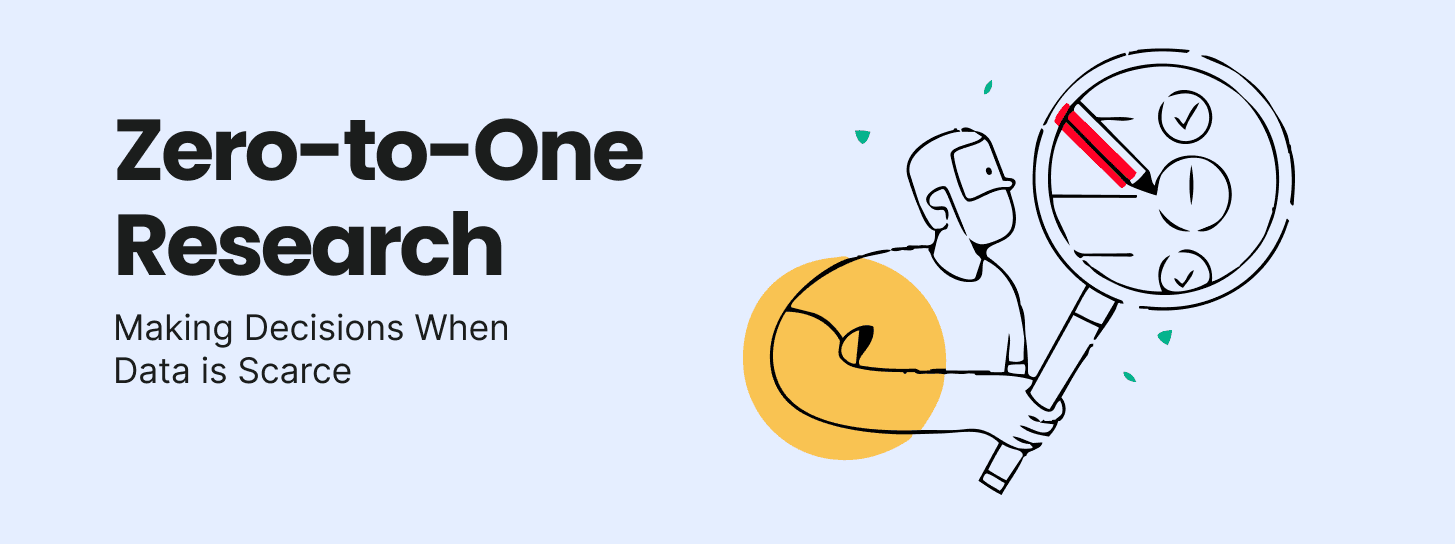
The journey of building a new product is rarely a linear progression. In the initial “zero-to-one” stage, the primary objective is to solve a specific problem and validate the potential for business growth through product innovation. Unlike established products that rely on massive datasets and behavioral analytics, early-stage ventures operate in a vacuum of information. This scarcity necessitates a shift in perspective, viewing product development as an investment portfolio where risk tolerance is high at the start and progressively decreases as more variables become known.
In this landscape, the role of research is to provide direction rather than absolute truth. Strategic partnerships during this phase require a focus on simplifying complexities and rooting solutions in a combination of science, design, and emotions. The visionaries and executioners within a product team must partner to provide holistic solutions that are guided by research but led by overarching business strategy.
The hurdles in zero-to-one development are multifaceted. Founders often struggle with deciding which features to prioritize when nothing is certain. There is a constant pressure to deliver, yet skipping the discovery phase is a critical mistake that can lead to building a product with limited market potential. Effective leadership in this environment involves exercising an “assumptions muscle”—making educated guesses based on the best available context and then seeking high-value feedback to tighten those conclusions.
| Zero-to-One Stage | Data Availability | Risk Profile | Primary Objective |
| Early Discovery | Extremely Scarce |
High Risk Tolerance |
Qualitative Assumption Validation |
| Concept Validation | Emerging Qualitative | Tactical Risk |
Identifying Core Functionality |
| Pre-PMF Growth | Mixed Qual/Quant | Strategic Risk |
Transitioning from MVP to MLP |
| Post-PMF Scale | High Quantitative |
Low Risk Tolerance |
Optimization and Incremental Gains |
The systemic way in which progress is shared and discussed during these stages determines the ultimate success of the venture. A methodical approach ensures that even when moving quickly, the team remains grounded in the business needs and the lived stories of potential users.
In the early stages, qualitative research serves as the cornerstone of decision-making. Founders frequently start with a set of deeply held assumptions about their users’ needs and behaviors. However, the failure to validate these qualitative assumptions can result in a product branding design that fails to connect with the target demographic. Mastery in zero-to-one research involves the synthesis of complex qualitative inputs into actionable storytelling that drives the product vision forward.
Understanding a target audience goes beyond simple demographics; it requires an investigation into their behaviors, preferences, and values. When a design ignores these preferences, the result is a disconnect between the product and those who matter most to its success. For example, a playful and colorful interface might alienate a conservative, professional audience, leading to lost opportunities and diminished brand recognition.
| Research Element | Strategic Purpose | Implication for Decision-Making |
| User Needs |
Identify fundamental pain points. |
Guides feature prioritization and roadmap. |
| Behaviors |
Understand existing workflows. |
Influences interaction design and user flows. |
| Emotional Drivers |
Find what creates “delight”. |
Foundation for building a “Lovable” product. |
Redbaton follows a methodology where research is used to unveil market insights and develop tailored strategies that improve decision-making via data-driven inquiry. This involves connecting businesses with the right users through precise recruitment to unlock the true potential of the product concept. The goal is to move from “good enough” to a solution that resonates on an emotional level.
A common mistake in early-stage research is over-explaining the context or dwelling on the history of the design. Product leaders and founders are busy and need direct, credible insights. Decisions must be explained through the lens of trade-offs and outcomes rather than academic theory. For instance, when choosing a typography set or a color palette, the discussion should center on how these choices impact user trust and perception rather than purely aesthetic preferences.
Ignoring the psychological impact of design elements—such as color psychology—can lead to a brand that conveys the wrong impression. A wellness brand using aggressive, high-contrast colors may inadvertently trigger stress in the very users it seeks to calm. These are not just “design fails”; they are business failures that stem from a lack of thorough audience research.
Speed is the primary currency for startups and fast-moving product teams. However, the traditional trade-off between “fast” and “thorough” is a false dichotomy. Continuous discovery acts as an operational framework that allows teams to integrate deep research insights with the rapid pace of product growth. This approach focuses on proactive identification of research opportunities that drive business growth rather than simply responding to immediate tactical requests.
Triangulation—the use of multiple research methods to validate findings—increases confidence in results without necessarily extending timelines. For example, a team can use Pay-Per-Click (PPC) advertising as a high-speed research tool to test value propositions and keywords before committing to a full design sprint.
| Research Proxy | Speed | Data Type | Strategic Value |
| PPC Campaigns |
Immediate |
Quantitative Intent |
Validating messaging and demand. |
| Qualitative Interviews | Moderate | Deep Emotional |
Understanding the “Why” behind behaviors. |
| Synthetic Panels | Very High | Predictive Data |
Pressure-testing hypotheses and questions. |
| Usability Testing | Moderate | Performance |
Identifying friction in the user journey. |
The integration of SEO and PPC strategies demonstrates how fast and slow research can coexist. While SEO builds long-term authority and trust, PPC offers the immediate visibility and data insights needed to refine and optimize campaigns in real-time. The feedback gained from these “rapid” methods is then applied to the broader, more sustainable strategy, creating a robust digital roadmap.
Even under intense pressure, skipping the discovery phase is a liability. Effective agency partnerships emphasize a “crash course” in the product, team dynamics, and context before any data collection begins. This ensures that the research remains actionable and aligned with what success looks like for the business. In low-maturity environments, user researchers assist by anticipating future trends and unmet needs, helping the company move beyond just improving existing processes.
The concept of the Minimum Viable Product (MVP) has long been the standard for early-stage development, focusing on core functionality and quick market entry. However, as markets become more saturated and competitive, simply being “viable” is often insufficient to capture and retain user interest. The shift toward a Minimum Lovable Product (MLP) prioritizes emotional connection and an exceptional user experience alongside basic utility.
While an MVP is designed to validate an idea and gather initial feedback, an MLP aims to build a deep emotional connection with users. This requires going beyond the “good enough” mindset. A product that is only functional might be tolerated, but a product that is lovable generates word-of-mouth marketing, higher virality, and stronger user advocacy.
| Dimension | Minimum Viable Product (MVP) | Minimum Lovable Product (MLP) |
| Core Goal |
Validation of concept. |
Emotional connection and delight. |
| Design Focus |
Simplistic and feature-limited. |
Pleasurable, intuitive, and engaging. |
| Market Strategy |
Fast entry, low financial risk. |
Competitive differentiation and loyalty. |
| Development Cost |
Low; focuses on essential features. |
Higher; includes “wow” elements. |
The transition from MVP to MLP involves refining the product based on initial user feedback to increase its appeal. This iterative process ensures that the product evolves to meet escalating user expectations for seamless and engaging experiences. For example, the evolution of Instagram from its initial MVP “Burbn” involved simplifying the product and adding delightful features like filters that users truly loved.
To transform an MVP into an MLP, teams must bring design to the table early rather than treating it as an aesthetic layer applied at the end. A product with great functionality but poor UX design is often doomed to fail. The implementation of an MLP strategy requires:
Deep Discovery: Understanding not just what users need, but what they care about on an emotional level.
Delightful Elements: Integrating features that evoke positive emotions, such as personalized interactions or visually appealing motion graphics.
User Onboarding: Guiding users through features in a way that showcases the product’s value effortlessly.
Measuring Engagement: Using metrics like Net Promoter Score (NPS) and sentiment analysis to gauge the emotional connection users have with the product.
This approach forces a weightier evaluation of the UX strategy, particularly in saturated markets where brand and user experience are the primary levers for stealing customers from entrenched competitors.
A strong brand identity is a pivotal asset in the zero-to-one phase, yet it is often where early-stage startups fail most visibly. Brand design encompasses the visual elements—logos, colors, typography—that define how a company is perceived. When these elements are inconsistent or ill-conceived, they damage the business’s identity and lead to a loss of customer trust.
Consistency is a cardinal rule. Without it, a brand identity appears fragmented and unprofessional. Fragmented identities occur when messaging and visual styles vary across different platforms, making it difficult for consumers to form a clear and lasting impression. Furthermore, overcomplicating a design with too many fonts, colors, or visual elements creates clutter that confuses the audience and reduces brand recall.
| Brand Design Fail | Consequence | Strategic Correction |
| Lack of Consistency |
Weakened recognition; fragmented image. |
Adherence to clear brand guidelines. |
| Ignoring Audience |
Failure to connect with the target demographic. |
Conduct demographic and behavioral research. |
| Poor Typography |
Diminished readability and professionalism. |
Align fonts with the brand’s intended tone. |
| Ignoring Psychology |
Misalignment between message and perception. |
Use color psychology to drive emotional impact. |
Neglecting to establish or follow clear brand guidelines leads to different teams using varying elements, resulting in a disjointed image. Brand design is not static; it must evolve to remain relevant in a changing market, but this evolution should be a thoughtful update rather than a complete, erratic overhaul.
A successful brand identity functions as a “turnkey” consultant for the business, simplifying life’s complexities and ensuring a consistent experience across all channels. This involves balancing minimal vs maximalist branding depending on whether the target is a tech or consumer audience.
The ultimate value of research in the zero-to-one phase is its ability to transform abstract insights into concrete roadmap priorities. This process requires turning complex qualitative and quantitative data into a cohesive strategy that guides engineering and design efforts.
Strategic roadmapping involves navigating the trade-offs between immediate results and sustainable growth. For instance, the choice between SEO and PPC is a classic decision-making hurdle. While PPC provides immediate traffic and conversion data—ideal for testing a new product launch—it is expensive and stops the moment the investment ceases. Conversely, SEO builds credibility and long-term trust, but it can take months or years to see significant results.
A robust roadmap integrates both:
Immediate Visibility: Using PPC to test keywords and landing pages, providing immediate feedback for the UX strategy.
Sustainable Growth: Investing in SEO to build long-term authority and reduce dependency on paid ads.
Data Integration: Using insights from PPC to refine the SEO approach and vice versa.
| Strategy Type | Result Speed | Trust Level | Long-Term Cost |
| PPC (Tactical) |
Immediate |
Lower (Ads skepticism) |
High (Ongoing spend) |
| SEO (Strategic) |
Slow |
Higher (Organic authority) |
Lower (Sustainable equity) |
Redbaton emphasizes a methodical approach where research guides business strategy to create solutions rooted in science and emotions. This includes creating user-centric platforms for testing products directly with users, ensuring that the roadmap is grounded in real performance rather than assumptions.
The emergence of AI and synthetic data is changing how zero-to-one research is conducted. Synthetic data—predictions shaped by large datasets rather than individual human interviews—allows teams to pressure-test their questions and hypotheses before spending resources on human sessions.
While synthetic tools are efficient for dry-running a study and identifying weak spots in survey design, they cannot replicate the lived stories, emotions, and subtle contradictions revealed in human sessions. Human evidence remains essential for understanding the nuances of timing, emotion, and meaning that drive deep engagement.
The intentional use of these tools can democratize tasks like tactical usability testing, freeing up researchers to focus on generative research that drives business growth. However, every hypothesis generated by AI must eventually be reality-checked with human users to ensure the findings are actionable and authentic.

How can we make product decisions when we have no historical data?
Focus on “pre-work” and discovery even under pressure. Exercise the assumptions muscle by making the best possible guess based on market context and then seeking high-value qualitative feedback to refine that guess. Use rapid testing tools like PPC to validate intent before building full features.
What are the primary risks of skipping the research phase in zero-to-one?
The primary risks include building a product with limited market potential, creating a brand identity that fails to connect with the audience, and wasting engineering resources on features that do not solve fundamental user problems.
How do we decide between an MVP and an MLP strategy?
An MVP is appropriate for quickly validating a concept with minimal resources in a new or unexplored market. An MLP is necessary for competitive or saturated markets where emotional connection and “delight” are the primary differentiators required to foster loyalty.
Why is brand consistency important for a startup?
Consistency builds recognition and professionalism. Fragmented identities across platforms confuse users and weaken the impact of the brand’s message, making it harder to build the trust necessary for early adoption.
Can AI replace user testing in the discovery phase?
No. While AI and synthetic data can help refine hypotheses and pressure-test questions, they lack the emotional nuance and lived experience that only human sessions can provide. AI is a tool for preparation, not a replacement for human validation.
The challenge of zero-to-one research is not about finding “perfect” data; it is about establishing a high-confidence direction in an environment of scarcity. Successful founders recognize that research is not a distraction from building, but the foundation upon which every engineering hour is spent. Moving from a purely functional MVP to a research-driven, lovable product requires a commitment to understanding the user’s emotional landscape as deeply as their functional needs. At Redbaton, we partner with visionaries to bridge the gap between intuition and science, ensuring that every design decision is a step toward market resonance. The question is no longer whether you can afford to do research, but whether you can afford the cost of being wrong
Explore more in the complete Red Baton design library — every article, grouped by topic.


