










Dec 30, 2025
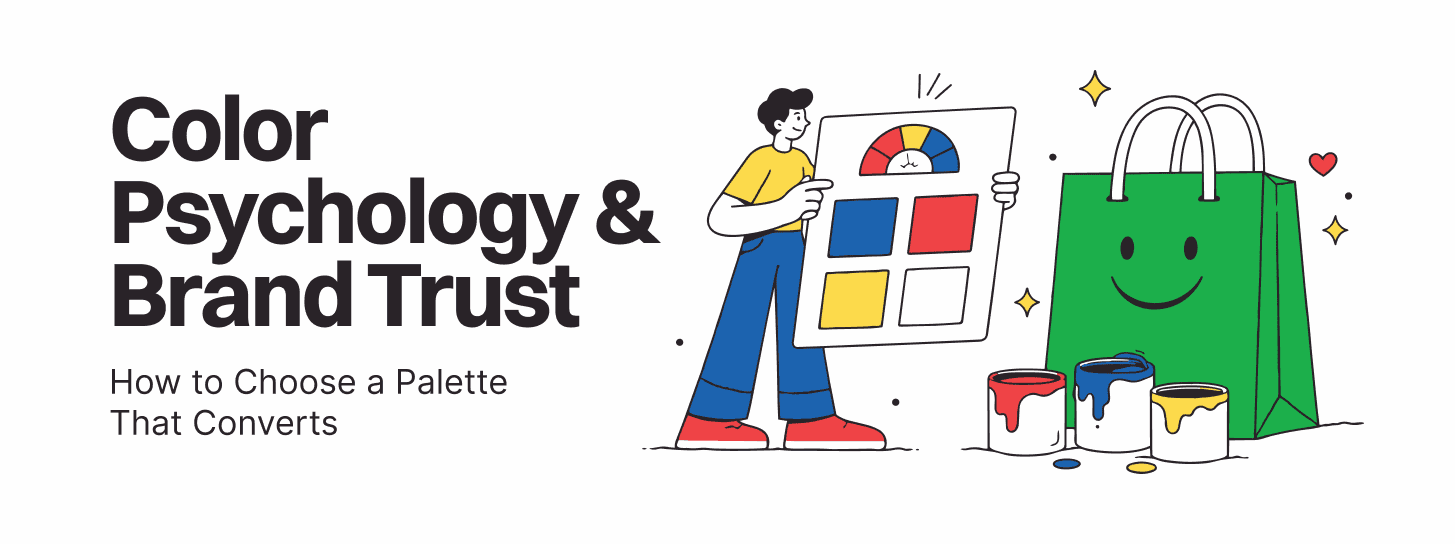
Decision-makers are busy, skeptical, and operating on limited cognitive bandwidth. Research consistently demonstrates that people make subconscious judgments about a digital product within 90 seconds of the initial viewing. More critically, between 62% and 90% of that snap assessment is based entirely on color. Our brains are biologically wired to react to color first, then shapes, then symbols, and finally words. If your color strategy fails at the first gate, your message never even reaches the “logic” center of the buyer’s brain.
Color psychology is not a “nice-to-have” aesthetic choice; it is a strategic tool to shape brand identity and influence purchasing behavior. A well-planned color strategy acts as “behavioral UX,” providing a mental shortcut that guides prospects toward conversion by creating an immediate feeling of reliability or urgency. For a senior consultant, the goal is to move beyond “liking” a specific shade of blue to understanding its role as a performance lever.
| Perception Factor | Metric | Implications for Product Leaders |
| Initial Assessment Window | 90 Seconds | The palette must communicate value and safety instantly. |
| Color Dependency | 62% – 90% | Color is the primary driver of the “trust or bounce” decision. |
| Brand Recognition Lift | 80% | Consistent color usage makes your brand memorable in a crowded market. |
| Readability Improvement | 40% | Strategic contrast reduces eye fatigue and improves information retention. |
When Redbaton works with fintech or high-growth SaaS founders, we treat color as the “emotional aftertaste” of the product. It’s what stays with the user after the session ends. A calm, balanced scheme can reduce the anxiety associated with complex financial workflows, while a high-contrast, energetic palette can create the momentum needed for productivity tools.
Trust is not a monolithic concept. In B2B tech, trust can mean security (protection of data), reliability (uptime and performance), or innovation (cutting-edge solutions). Your palette must be calibrated to the specific type of trust your audience demands.
Each primary color carries a weight of positive and negative associations. Choosing the wrong one is equivalent to a salesperson wearing the wrong attire to a board meeting—it creates a fundamental mismatch between the promise and the presentation.
Blue (Trust & Stability): The undisputed king of corporate branding. It evokes feelings of security, professionalism, and logic. It is standard for financial services and healthcare because it signals a “safe pair of hands”. However, its overuse has led to “institutional drab” which can lack visual punch.
Black (Luxury & Authority): Exudes sophistication and power. Used effectively by brands like Apple or Sony, it creates a sense of exclusivity and innovation. In professional services, it communicates a “premium” identity, but requires high-quality white space to avoid feeling heavy or mournful.
Green (Growth & Clarity): Symbolizes sustainability and continuous improvement. It is highly effective for eco-friendly brands or companies focused on wellness and health. In fintech, it subtly whispers of financial growth and prosperity.
Red (Urgency & Power): While it signifies energy and excitement, it is a double-edged sword. It is ideal for clearance sales or critical system alerts but can signal “danger” or “aggression” if used as a primary brand color in high-stress industries.
Purple (Innovation & Creativity): Associated with imagination and luxury. It suggests a brand that pushes boundaries and offers cutting-edge solutions. It is a strong choice for creative tools or disruptive tech that wants to avoid the “blue” cliché.
A strong primary color is a start, but a mature brand requires a supporting palette to provide depth and visual interest.
| Secondary Color | Positive Traits | Strategic Application |
| Orange | Enthusiasm, Warmth, Energy |
Perfect for friendly, approachable B2B brands like HubSpot. |
| Yellow | Optimism, Friendliness |
Used for highlights to build confidence and attract attention. |
| Teal/Coral | Modernity, Connection |
Often used by social media or community-focused startups to feel inviting. |
| Neutral Grays | Dignity, Knowledge |
Essential for dashboards to reduce cognitive load while maintaining professionalism. |
If you are building a fintech app or a data security platform, your first instinct is likely to choose navy blue. It is safe. It is trusted. But in 2026, it is also a signal that you might be “just another SaaS company”. The overuse of blue has made it harder for new brands to differentiate.
Founders looking to stand out should consider the “disruptive trust” model. This involves using a grounded, traditional secondary palette (like Slate Shadow or Concrete Interface) to provide structure, while utilizing “electric” intensity for primary brand markers. Swapping institutional drab for colors like Electric Magenta or High-Vis Yellow signals that your brand understands the “speed and fluidity of the modern economy”.
Credibility does not require a lack of character. By adopting the visual vernacular of editorial pop or high-performance sports HUDs, fintech tools can transform transaction approvals from mundane clicks into satisfying digital rewards. This shift is particularly relevant for Gen Z-focused financial literacy apps that want to reframe budgeting as a bold act of self-expression rather than a secretive obligation.
At Redbaton, we emphasize a methodical discovery phase to determine if your brand should lean toward “steady reliability” (dark blue) or “visionary creativity” (deep purple) based on your stage of growth and target audience expectations.
One of the most expensive design mistakes a founder can make is failing to separate the brand palette from the functional palette in their UI/UX design.
Your brand palette is for storytelling. It’s what goes on your pitch decks, your website hero sections, and your social media assets. It sets the emotional tone and establishes recognition. While Gold might be the primary brand color for a company like McDonald’s, it is the proportion and usage that makes it unmistakable.
The functional palette is strictly for utility. It communicates system status and guides user actions within the product.
Success (Green): Confirms positive outcomes.
Error (Red/Amber): Alerts the user to critical issues or data destruction.
Warning (Yellow): Signals caution without triggering panic.
Information (Blue/Neutral): Provides contextual help without demanding immediate action.
The Trade-off: If your brand color is red, you cannot easily use it for error states without confusing the user. If your entire interface is a “brand blue,” your “Learn More” buttons will disappear into the background. Strategic color usage means using your brand colors sparingly to draw attention to essential actions while relying on a neutral range for surfaces and backgrounds.
The impact of color is measurable. We don’t make these decisions based on “gut feeling”; we look at how changes in contrast and alignment affect brand strategy and revenue efficiency.
A B2B SaaS company noticed a 27% increase in conversions and higher trust ratings after simply changing their signup button from a bright, off-brand orange to their established brand blue with a higher contrast ratio. This highlights that consistency and contrast are often more important than the specific hue chosen.
A classic HubSpot study found that red CTA buttons outperformed green ones by 21% in conversion rates. While green signals “go,” red creates a sense of urgency that prompts faster decision-making. However, this effect is contextual; if your page is already cluttered with red elements, a red button will lose its power.
Data from 127 high-performing websites reveals that design decisions focused on reducing cognitive load yield the highest returns :
Right-aligned CTAs: 19% higher conversion than center-aligned, as they follow the natural F-pattern scanning of the user.
Benefit-focused subheadings: 18% higher conversion than feature-focused ones.
Decluttered homepages: The Weather Channel achieved a 225% conversion increase by simply taking things away.
One Redbaton project for an airline company involved revamping the user flow from sign-up to payment in less than three pages. By simplifying the process and using strategic visual cues, the website exceeded its sign-up goal by 5x and quadrupled social media engagement.
If you are expanding into international markets, your color palette might be your biggest liability. Color perception is not universal; it is heavily influenced by cultural, gender-based, and generational differences.
| Color | Western World | China/East Asia | Egypt/Latin America |
| Red | Danger, Urgency, Love | Prosperity, Good Fortune | Danger, Caution (Middle East) |
| White | Purity, Peace, Weddings | Death, Mourning | Purity |
| Yellow | Happiness, Optimism | Money, Status, Wealth | Death, Mourning (Egypt) |
| Green | Nature, Sustainability | Fertility, Harmony | Religious Connotations |
For instance, while blue is a “safe” color for a global audience because it lacks major negative connotations, red can signify mourning in parts of Africa despite being a symbol of prosperity in China. A founder must conduct user research to understand the cultural background and domain expertise of their specific viewing context.
As we look toward 2025 and 2026, the way we apply color is becoming more dynamic and data-driven. The “static” brand book is being replaced by “living color palettes”.
AI-Driven Personalization: Tools like Adobe Sensei now analyze user behavior to recommend color schemes that align with specific audience preferences. Forward-thinking brands are even testing interfaces that shift colors based on the time of day or the user’s current mood.
Bento Box Layouts: This trend uses structured, compartmentalized grids to organize information clearly, making it easier for users to process complex data points without being overwhelmed.
Minimalist Data Visualization: In 2026, we are seeing a shift toward “silent” design—using subtle color-coding for charts and dashboards to communicate trends without distracting the user from the core data.
Dark Mode & High-Contrast Accents: Dark mode remains a dominant preference for technical audiences, as it reduces eye strain and makes vibrant “glitch” colors pop with aggressive clarity.
As a senior consultant, I often have to tell founders that their “bold new look” is actually driving customers away. Here are the red flags we look for:
“Holi” on the Web Template: Using neon colors incessantly makes the text “bleed” into the background and can literally cause visual distress for the user. Neon should be reserved for small elements or “breaks” in the grid.
Generic Stock Clichés: Relying on unoriginal brand marks (clouds for cloud storage, gears for tech) makes your brand look unoriginal. Customers want to connect with an authentic identity, not a collection of stock icons.
Vibrating Colors: Pairing highly saturated, clashing colors (like bright red on bright blue) creates a “vibrating effect” that makes reading impossible and leads to immediate abandonment.
Inconsistent Print vs. Digital: A common problem arises when a “bold” digital palette doesn’t translate to print materials like shirts or signage. Colors selected in the Hex/RGB space often look dull in CMYK, leading to a fragmented brand identity.
Boilerplate Accessibility: “Trendy” muted or pastel tones often fail in real-world lighting or for color-blind users. If your contrast ratio is below 4.5:1, you are effectively telling a portion of your market that their business isn’t wanted.
To maintain clarity and avoid distracting the user, stick to no more than three primary colors for your core identity. Develop a strong secondary palette for illustrations and accents to prevent the design from feeling restrictive.
Blue is the most trusted brand color for 54% of consumers, but it is also seen as overused. If you use blue, consider differentiating through unique saturation levels or by pairing it with a vibrant, unexpected accent color like coral or mint.
Yes. Documented cases show that moving from a low-contrast “off-brand” color to a high-contrast brand color can increase sign-ups by 27%. Even small shifts in CTA color, such as from green to red, can result in a 21% lift if it creates the necessary urgency.
Consistent branding can increase revenue by up to 23%. When your website colors don’t match your social media or email campaigns, it creates a “visual imbalance” that erodes the user’s sense of trust and professionalism.
Start with user research to understand the cultural nuances of your target demographic. Avoid using colors with heavy negative connotations (like white for mourning in parts of Asia) and test your palettes across different regions to ensure the emotional impact remains consistent.
Explore more in the complete Red Baton design library — every article, grouped by topic.


