











Jan 21, 2026
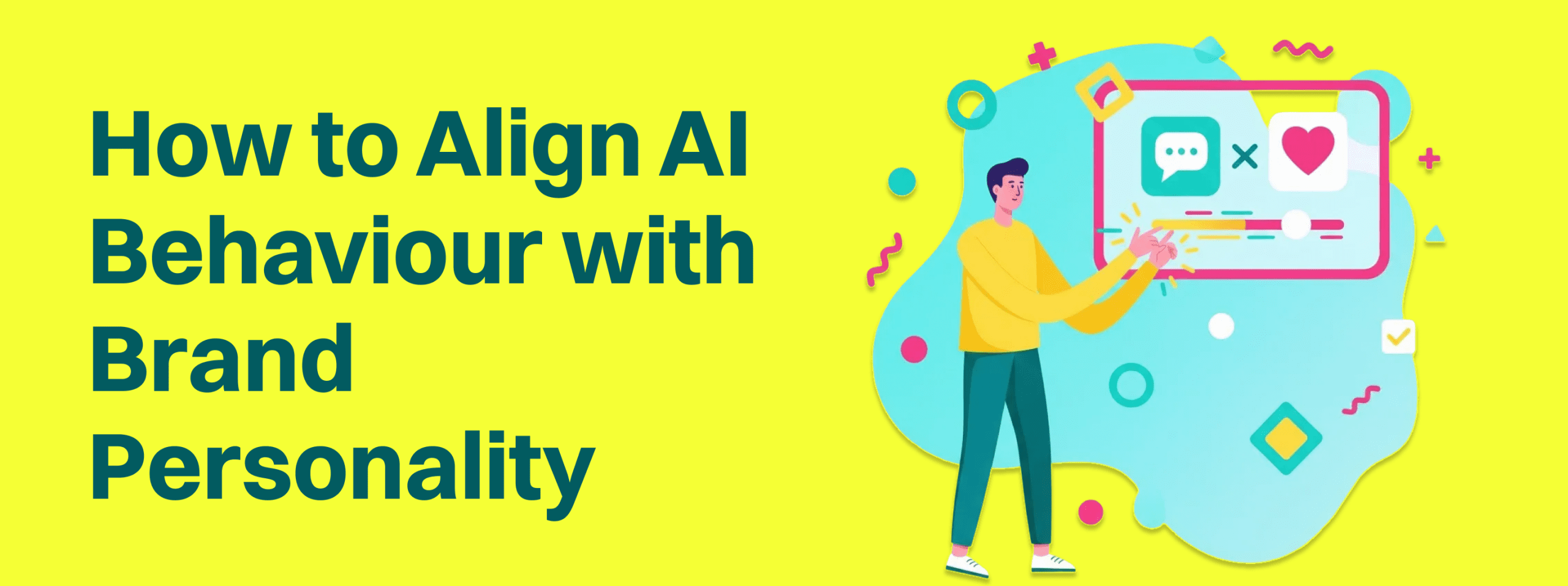
Many founders are discovering the same uncomfortable truth. You launch an AI assistant inside your product. The demo works. Early feedback is positive. Then something strange happens. The assistant starts sounding like every other AI tool on the internet. Generic. Safe. Corporate. Sometimes even wrong. In the worst cases, it invents answers. Or gives outdated policies as facts.
What looked like innovation quickly becomes a brand liability. The core issue is simple. Most organizations plug AI into their product without translating their brand into behavioral rules the model can follow.
A brand PDF cannot control an AI system.If your product includes conversational interfaces, copilots, or autonomous agents, brand personality must become operational infrastructure.
B2B products already suffer from what many teams informally call the enterprise tax. Interfaces are overloaded with features. Workflows require training. Navigation feels like a maze.
The result is predictable.
Now AI is being added on top of these systems. When done poorly, it creates another layer of friction. Instead of simplifying the experience, the AI assistant becomes:
The best AI products move in the opposite direction. They remove the need to hunt through menus.In one B2B SaaS implementation, an AI assistant allowed users to discover features through questions instead of navigation. Task completion speed increased 3.2x, and feature adoption rose 47%.
This shift toward searchless interfaces is where AI creates real value. But it only works when the assistant behaves consistently with the brand and product logic. Without that alignment, you simply replace confusing menus with confusing conversations.
Most companies treat brand voice as a marketing asset. That model breaks the moment AI starts generating responses on behalf of the organization. Brand voice is no longer a creative exercise. It is a governance problem.
Without clear guardrails, AI systems drift toward safe, generic language. Over time the brand personality gets averaged out by the model’s training data. This is the silent erosion many teams are starting to notice.
A distinctive founder narrative becomes:
The long term result is commoditization. If your product sounds like everyone else, the only remaining differentiator is price. Leadership teams should start tracking new operational metrics such as:
These are not marketing metrics. They are brand risk indicators.
Forward thinking organizations are already treating brand systems as part of product architecture. At Redbaton, this usually begins with translating brand strategy into machine readable behavioral rules, not just visual identity.
AI personality is not created through tone guidelines alone. It is engineered through architecture. Most successful systems rely on a three layer alignment model.
System prompts define the role, tone, and constraints of the agent. They establish rules like:
This is the fastest way to align behavior. In many cases, carefully designed prompts combined with few-shot examples can match the performance of fine tuned models for tone and formatting.
Retrieval Augmented Generation solves one of the biggest problems with large language models. Hallucination. Instead of relying on general training data, the model retrieves answers from verified internal knowledge such as:
The system pulls relevant information from a vector database and feeds it into the prompt before generating a response. This grounding step dramatically reduces invented answers.
A well known legal case illustrates why this matters. A customer received incorrect information from an airline chatbot about a bereavement fare policy. The tribunal ruled the airline responsible because the chatbot acted as a representative of the company.
Without RAG, AI agents are effectively guessing.
Fine tuning changes the internal parameters of the model. This is typically used when teams need:
Fine tuning also improves consistency in high volume applications, reducing the long term operational cost of running AI systems. For most teams, prompts and RAG deliver immediate value. Fine tuning becomes relevant when usage grows or domain expertise becomes deeper.
Many product teams chase a simple goal. Make the AI sound human. In practice, this often creates the opposite effect.
When an AI imitates empathy without understanding the user’s context, people sense the mismatch immediately. It triggers what researchers describe as a subliminal threat response.
The experience feels artificial. Users do not want a virtual therapist when they are trying to:
They want speed. Functional clarity is far more valuable than synthetic friendliness. The most successful conversational systems prioritize:
Empathy should show up through efficiency, not emotional language. If a user solves their problem in seconds, the interface feels respectful. If they read three paragraphs of friendly filler before getting an answer, trust drops fast.
Once an AI agent is live, maintaining consistency becomes the next challenge. Manual reviews do not scale when thousands of conversations happen daily. This is where the LLM-as-a-Judge methodology becomes useful. Instead of humans reviewing every output, a second model evaluates responses against a scoring rubric.
Typical criteria include:
The judge model provides both a score and reasoning. In well designed systems, these evaluations reach over 80% agreement with human reviewers, making it possible to monitor quality across large volumes of interactions.This turns brand consistency into a measurable system instead of a subjective opinion.
For many general tasks, yes. Modern models respond well to structured prompts with a few high quality examples.Fine tuning becomes useful when the domain is highly specialized or when strict consistency is required across large scale interactions. It can also reduce token usage in high volume systems, lowering long term operational costs.
The most effective approach is Retrieval Augmented Generation (RAG).By grounding responses in verified internal data such as policies and documentation, the model is far less likely to invent answers. Combining RAG with low temperature settings between 0.1 and 0.3 helps ensure deterministic outputs.Hard coded guardrails outside the model should also block unsafe or non compliant responses.
It is a scalable evaluation approach where a second language model evaluates the output of another model.The judge model uses a predefined rubric to assess qualities like helpfulness, toxicity, and brand tone. This allows teams to review thousands of interactions automatically while maintaining consistent quality standards.
Most failures come from rigid decision trees and forced menus.B2B users operate under time pressure. When an interface requires long inputs or unclear chatbot flows, cognitive load increases and users abandon the tool.Successful conversational interfaces prioritize speed and immediate task completion.
Reusable synthetic personas can improve brand consistency, but they also raise transparency concerns. If users feel misled by a simulated personality, the reputational damage can outweigh the efficiency gains. Ethical implementations require clear disclosure and regular bias audits.
Explore more in the complete Red Baton design library — every article, grouped by topic.


