











Jan 16, 2026
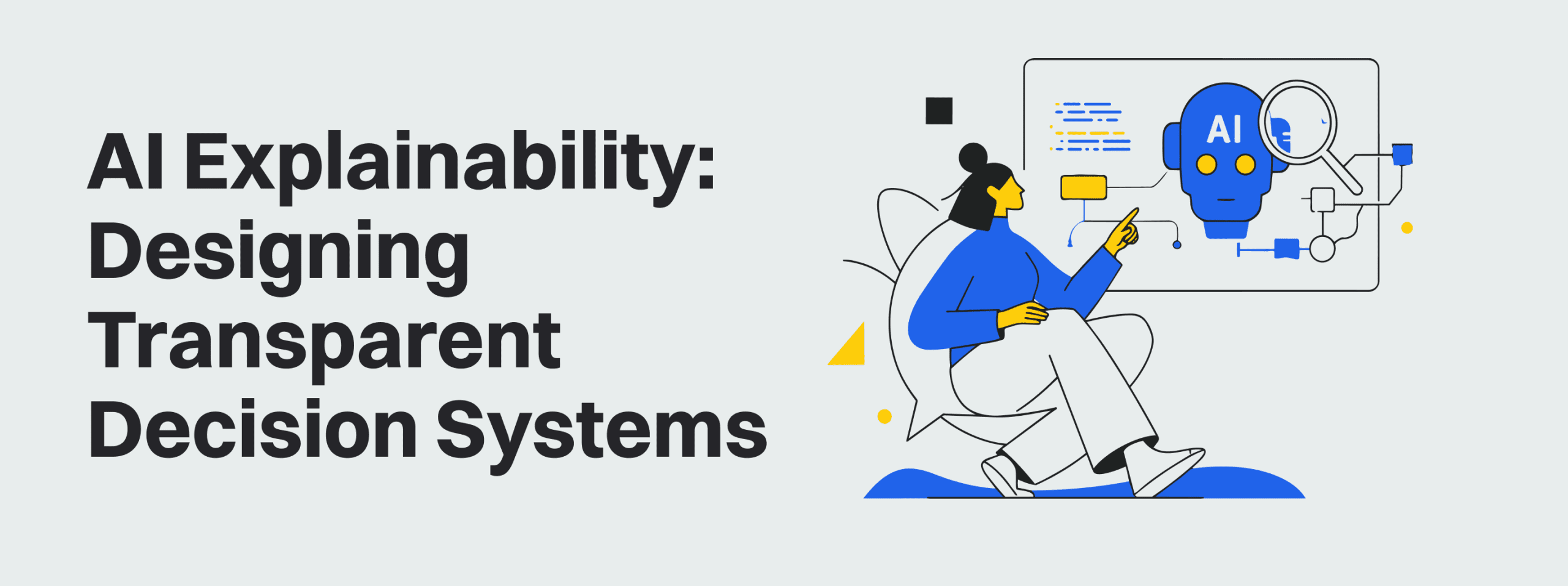
The rapid proliferation of artificial intelligence within the corporate ecosystem has introduced a fundamental paradox: while the capability of large language models and automated agents increases at an exponential rate, the delta between system intelligence and user understanding continues to widen. For founders and product leaders, this gap represents the single greatest threat to product adoption. When a user utters the phrase, “I don’t understand how this AI made that decision,” the product has already failed a critical threshold of reliability. User experience (UX) is no longer just about the aesthetic layer; it has become the primary mechanism for “stitching together” empathy and intelligence.
In the current enterprise landscape, artificial intelligence is often perceived as a “black box” that operates on probabilistic logic, which stands in stark contrast to the deterministic software interfaces of the previous decade. This shift requires a new philosophy of design—one that Redbaton characterizes as the movement from “Intelligence to Intuition”. Effective AI UX design principles turn complicated processes into clear, meaningful interactions that users can easily understand and trust. This transition is essential for building authority in a market where intelligence has become a commodity, but trust remains a premium asset.
The following analysis explores how enterprises can move beyond mere compliance with ethical guidelines and toward a “Confidence Mindset”. By operationalizing trust through specific design patterns and frameworks, organizations can ensure that their AI deployments are not only efficient but also resilient to the reputational risks associated with algorithmic opacity and bias.
| Feature | Traditional Software UX | AI-First Enterprise UX |
| Core Logic | Deterministic (If-Then) | Probabilistic (Likelihoods) |
| User Role | Operator | Supervisor/Collaborator |
| Trust Basis | Reliability of Code | Transparency of Decision-Making |
| Key Friction | Navigation/Latency | Uncertainty/Opacity |
| Design Goal | Ease of Use | Clarity of Logic and Agency |
Building a trustworthy AI product requires more than just high-quality training data; it necessitates a structured approach to how that data is communicated to the end-user. The UX Trust Framework, as utilized by specialists at Redbaton, focuses on bridging the gap between complex AI logic and human understanding. This framework is built upon three primary pillars: Transparency, Agency, and Reliability.
Transparency in AI design is often misunderstood as simply showing the user more data. However, true transparency involves communicating AI decision logic in relatable terms. This involves surfacing internal model insights, such as the specific “features” or concepts an LLM activates when processing language. For instance, tools like Gemma Scope allow designers to see how a model interprets tone, idioms, or emotional language, which can then be surfaced to the user as a “Why” explanation for a specific output.
Agency is the degree to which a user feels in control of the AI system. In many enterprise applications, the risk is that the AI operates too autonomously, leading to a sense of powerlessness for the user. Redbaton advocates for the use of “autonomy sliders” and options to accept, reject, or modify AI results. These features ensure that the human remains in the loop, providing a necessary check on automated actions that may overlook cultural or situational nuances.
Reliability is established through a consistent feedback loop. When a user sees the visible impact of their input on the AI’s future behavior, a collaborative relationship is formed. This active learning principle shares accountability between the human and the machine, turning the AI from a tool into a teammate.
The concept of “trust” in AI is often a misnomer; what enterprises actually require is “calculated reliance”. This is the psychological state in which a user understands the system’s capabilities and limitations well enough to depend on it for specific outcomes. Building this reliance involves managing the “Psychology of Confidence” through intentional design touchpoints.
Research into ethical AI design indicates that the single sentence “I don’t understand how this AI made that decision” can decide the fate of a multi-million dollar enterprise deployment. To prevent this, designers must translate ethics into tangible design patterns. This includes the use of interactive fairness dashboards that present bias metrics openly to both developers and end-users. When an enterprise is transparent about where its AI might struggle, it paradoxically builds more trust than a system that claims to be infallible.
Reliance is also bolstered by “reversible actions”. If a user knows they can correct an AI mistake easily, they are more likely to experiment with the system and find higher-value use cases. This design choice encourages a conscious evaluation of AI-generated advice rather than a passive acceptance or a reflexive rejection based on fear.
Explainable AI (XAI) is the technical and design discipline of making AI outputs understandable to humans. The “black box” nature of modern LLMs is a significant barrier to this, but several emerging design approaches are tackling these challenges directly.
A “chain-of-thought” reveal is a design pattern that surfaces the internal reasoning steps an AI took to arrive at a conclusion. In high-stakes environments like healthcare or finance, seeing the intermediate steps allows a professional user to verify the logic before acting on the final recommendation. This pattern transforms the AI from a “teller” of truths to a “show-er” of logic.
Not all friction in UX is negative. “Good friction” refers to intentional design steps that slow a user down before they make a high-stakes decision based on AI output. This might include confirmation steps or reflective prompts that ask the user, “Does this data align with your clinical experience?” or “Are you sure this financial forecast accounts for current market volatility?”. This prevents the “automation bias” where users blindly follow AI suggestions without critical thought.
Tools such as TalkTuner provide a layered approach to transparency by helping users understand how they are being perceived by the AI. This includes making inferred traits—like age, gender, or education level—visible and editable. When a user can correct the AI’s internal “user model,” they gain a significant sense of agency and insight into the system’s internal inferences.
| XAI Pattern | User Benefit | Enterprise Value |
| Chain-of-Thought | Logic Verification | Reduced Error Rates |
| Autonomy Sliders | Custom Control | Higher User Adoption |
| Fairness Dashboards | Bias Recognition | Regulatory Compliance |
| Feedback Loops | System Refinement | Continuous Improvement |
The theoretical application of ethical AI design is most evident in the work Redbaton has performed for global consumer goods giant Unilever. Facing scalability obstacles due to inconsistent architecture and restricted data accessibility, Unilever required a centralized platform to manage and deploy automated solutions across various regions and functions.
Redbaton’s intervention involved the creation of a “Bot Store,” a one-stop repository designed for the “Automation Factory”. The goal was to enhance the existing infrastructure by organizing content for user-friendly consumption and providing a policy framework that covered the core principles of the automation initiative. This project stands as a testament to how design can unlock business potential by simplifying complex technical landscapes.
The architectural overhaul led by Redbaton was not merely aesthetic. By introducing a centralized track to share annotated datasets and track bot status across all clusters, the project overcame the obstacles that had previously hindered global adoption. The results were quantifiable and transformative for the enterprise’s bottom line.
| Outcome Metric | Resulting Impact |
| Processes Automated | 1,500+ |
| Man-Hours Saved | 3.4 Million |
| Adoption Increase | 50% |
| Engagement Scope | Global/Cross-functional |
This case study illustrates that for a “leading UI/UX design company,” the value added is not just in the “visually stunning” nature of the interface but in the “highly intuitive” functionality that drives efficiency. Redbaton’s commitment to “shaping impactful and user-centric digital landscapes” is evidenced by the seamless integration of aesthetics and functionality in the Bot Store project.
Another landmark project in Redbaton’s portfolio is the collaboration with Geektrust, an AI hiring ecosystem. This project involved designing a series of AI-powered products to transform every stage of the hiring journey, from resume evaluation to technical interviews. The core challenge was to make a potentially impersonal process feel human-centric and fair.
Redbaton’s work on the “AI code pairing interviewer” is particularly notable. By building an AI-driven experience that facilitated technical interviews, the team was able to make the process 2.5 times faster while reducing recruiter effort by 60%. Crucially, the system generated detailed interview reports that allowed recruiters to make faster, data-driven hiring decisions based on transparent metrics.
The ecosystem also included an “AI candidate screening agent” and “AI-powered resumes.” The screening agent reduced the time required for recruiter-led screenings from 35 minutes to under 10 minutes. The resumes were designed to highlight a candidate’s true potential, cutting recruiter evaluation time by 40% and enabling a “fairer and insight-driven” hiring process through intelligent search.
These achievements were underpinned by a unified design system that consolidated multiple product languages into a single framework. This system achieved 85% adoption across product teams, ensuring that the AI interventions felt like a cohesive part of the brand experience rather than fragmented technological additions. This project highlights how “Experience Design” can solve “wicked problems” in the enterprise by prioritizing the desires and emotions of both the recruiter and the candidate.
As an agency, Redbaton also examines the internal impact of AI tools on the design process itself. The integration of AI-powered tools such as Adobe Firefly, Dall-E 3, and Jasper has revolutionized how designers approach their work, offering a blend of increased efficiency and rapid conceptualization. However, this revolution is not without its ethical and creative tensions.
AI tools excel at automating repetitive and time-consuming tasks. For designers, this means more time can be spent on high-level strategy and research. AI can provide real-time feedback on typography, color contrast, and layout, and it can generate diverse creative concepts to spark inspiration.
| AI Tool Category | Example Applications | Strategic Impact |
| Generative Content | Jasper, ChatGPT | Rapid Copywriting/Brainstorming |
| Visual Assets | Dall-E 3, Firefly | Custom Icons, Illustrations, Backgrounds |
| Design Feedback | AI Plugins | Real-time Layout/Typography Optimization |
| Persona Development | ChatGPT | Detailed, Data-Driven User Archetypes |
The primary concern regarding AI in graphic design is the potential to stifle originality. Because AI tools generate designs based on predefined algorithms and historical data, they are limited by the information they have been trained on. This can result in designs that lack the human intuition and cultural depth required to break new ground creatively.
Furthermore, there are significant ethical and copyright concerns. When AI-generated designs are based on existing patterns, questions arise about intellectual property and the ownership of the final product. For professional designers, an over-reliance on automation can lead to a loss of the “human touch”—the personal, emotional, and artistic elements that make a design stand out in a competitive landscape.
Redbaton’s stance is that AI should be an “indispensable companion” rather than a replacement. The agency’s work is “guided by research and led by business strategy,” ensuring that every solution is “rooted in science, design, and emotions”—elements that AI cannot yet fully replicate.
For founders and decision-makers, the ethical design of AI is not just a moral obligation but a risk-management strategy. To implement “Responsible AI” effectively, product teams should follow a rigorous checklist before any automated feature is shipped.
By mapping ethical touchpoints early in the development cycle, enterprises can move from a reactive posture of “Compliance” to a proactive posture of “Confidence”. This involves involving UX and content designers in early planning sessions, rather than bringing them in only at the end of the project to “skin” the interface.
An authoritative design agency must not only produce excellent work but also present it in a way that search engines and users can navigate effectively. A well-organized site structure is a signal of a “trustworthy resource”. For Redbaton, this involves a “silo structure” that groups content into themed categories, ensuring that closely related topics stay together.
The pyramid model organizes content from a broad, authoritative “pillar page” (such as a core service page for UI/UX Design) down to detailed “cluster pages” (such as a specific case study on AI in Fintech). Internal links within these silos reinforce the thematic relevance and help search engines understand the site’s content hierarchy.
Effective internal linking is not about the quantity of links but their quality and relevance. Descriptive anchor text should be used to clearly communicate what the destination page is about, avoiding generic phrases like “click here”.
| Linking Principle | Execution Strategy | Purpose |
| Descriptive Anchors | “Choose the Right UI UX Agency” | SEO Relevance/User Context |
| 3-Click Rule | Flat Site Architecture | Ease of Navigation/Crawlability |
| Cornerstone Linking | Points to high-value pillar pages | Distributes PageRank/Authority |
| Nofollow Policy | Avoid on internal links | Ensures full “link juice” flow |
By following these principles, an agency ensures that its “cornerstone content” gains immediate visibility and that the site remains easy for both users and crawlers to navigate.
As we look toward 2026 and beyond, the role of the designer is expanding into new dimensions of interaction. This is particularly evident in the rise of “Agentic AI” and the “Metaverse”.
Agentic workflows represent a shift where AI is given the authority to perform tasks autonomously over time. Designing for this requires a sophisticated understanding of “autonomy sliders” and “agentic workflows”. The UX must allow the user to manage the AI’s influence, providing hard stops for consequential decisions while allowing for seamless automation of mundane tasks.
The Metaverse offers the opportunity to create “playful communication and new experiences” in sectors like Fintech and digital teamwork. This will require “quantum leaps” in UX design as interaction dimensions expand to include physical and multisensory devices. New security concepts will be needed to protect users and their data in these virtual spaces, further heightening the need for ethical design at the foundational level.
Senior designers in this space are now expected to have a “strong command” of real-time AI-driven experiences and “Blockchain-based product interfaces”. These technologies ensure transparency and security in decentralized environments, providing a “user-centered solution” for both end-users and business applications.
Ethical AI design involves bridging the gap between complex AI logic and human understanding to make systems transparent, accessible, and accountable. It prioritizes the user’s need to understand how decisions are made and provides mechanisms for human control.
Governance can be operationalized by mapping ethical touchpoints early in the product lifecycle, involving UX designers in early planning, and using frameworks like the UX Trust Framework to guide development.
The primary principles include transparency (clarifying logic), agency (adjustable autonomy), and feedback loops (showing how user input refines AI behavior).
AI enhances efficiency by automating repetitive tasks but carries the risk of stifling originality because it relies on existing data patterns. Human intuition remains essential for high-level creative strategy.
The 3-click rule suggests that a user should be able to find any information on a website with no more than three mouse clicks, emphasizing the need for a flat and intuitive navigation structure.
The integration of artificial intelligence into the enterprise is an inevitability, but the success of that integration is contingent upon the quality of the user experience. For founders and product leaders, the strategic move is to view “Ethical AI Design” not as a constraint, but as a competitive differentiator. Organizations that can translate the “black box” of machine intelligence into the “human intuition” of a seamless interface will lead the next decade of digital transformation.
Redbaton’s methodology—rooted in the synergy of science, design, and emotion—provides a blueprint for this transition. By focusing on “Human Experience” and the “Strategic Partnership” with innovation, the agency helps brands create solutions that are not only efficient but deeply resonant with their users. Whether it is saving 3.4 million man-hours for Unilever or reducing recruiter effort by 60% for Geektrust, the impact of well-designed AI is measurable and profound.
As we move into an era of agentic workflows and immersive virtual spaces, the fundamental principles of transparency, agency, and accountability will remain the bedrock of trust. In the words of the Redbaton vision: the goal is to simplify life’s complexities by strategically partnering with every futuristic innovation, ensuring that as technology becomes more intelligent, it also becomes more human.


