











Dec 23, 2025
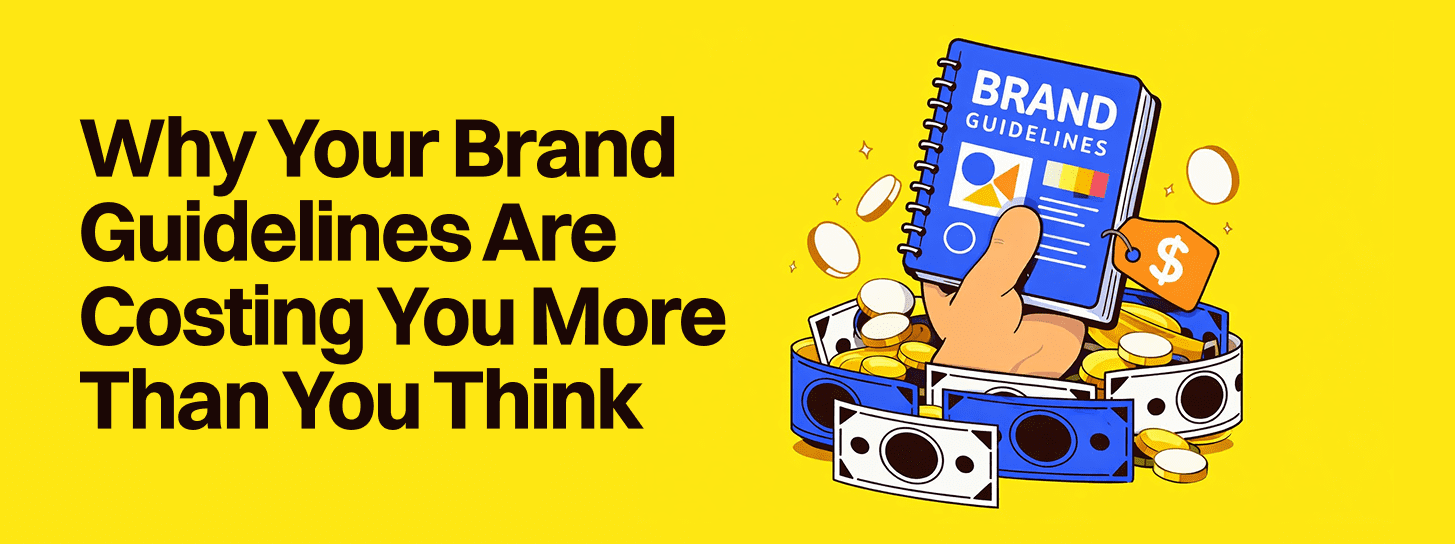
The contemporary corporate landscape is defined by an unprecedented velocity of change, where the traditional markers of business stability are frequently disrupted by technological innovation and shifting consumer behaviors. In this environment, the brand serves as the most critical asset for any organization, acting as a beacon of trust and a shorthand for value in a saturated marketplace. However, for many founders and Chief Marketing Officers (CMOs), a significant and insidious threat to business health remains hidden within their own operational frameworks: the outdated brand guideline. While often viewed as a static document—a historical artifact of a company’s founding or its last major rebrand—the brand guideline is, in reality, the operational manual for the company’s most valuable intangible asset. When this manual fails to reflect the current strategic reality, the resulting brand inconsistency does not merely lead to aesthetic friction; it manifests as a measurable and compounding financial drain.
Redbaton, established in 2015 as a turnkey consultant for futuristic innovation, has observed that the gap between a brand’s stated identity and its actual execution across digital touchpoints is a primary driver of lost revenue and operational inefficiency. This report examines the multi-dimensional costs of outdated brand guidelines, utilizing empirical data and cross-industry analysis to demonstrate that brand consistency is not a marketing luxury but a fundamental requirement for sustainable growth and capital efficiency. By treating brand identity as a dynamic system rather than a static snapshot, organizations can unlock significant revenue potential and eliminate the systemic waste associated with brand entropy.
The financial case for maintaining rigorous brand consistency is supported by a robust body of evidence across multiple sectors. Research indicates that organizations that maintain a uniform brand presentation across all platforms can realize an average revenue increase between 23% and 33%. This “consistency dividend” is a direct result of reduced cognitive load on the consumer and the acceleration of the trust-building process. In a market where 81% of consumers report needing to trust a brand before considering a purchase, and 88% require trust for long-term loyalty, any visual or messaging inconsistency acts as a barrier to conversion.
The impact of consistency is particularly pronounced in the relationship between brand equity and media efficiency. Inconsistent brands are often forced to over-invest in performance marketing to compensate for poor organic recognition. Data suggests that companies with inconsistent branding may require up to 1.75 times more media spend to achieve the same growth rates as their consistent counterparts. This phenomenon occurs because every off-brand touchpoint resets the consumer’s memory of the brand, essentially forcing the marketing budget to “buy” recognition that should have been earned through visual and verbal cohesion.
| Financial Metric | Impact of High Brand Consistency | Consequences of Inconsistency |
| Revenue Growth |
23% to 33% Increase |
Stagnation or declining market share |
| Brand Recognition |
Up to 80% Improvement |
Fragmented identity and low recall |
| Marketing ROI |
25% to 100% Higher (2025 Forecast) |
20% to 50% Lower ROI due to rework |
| Media Spend Efficiency | Optimized (1.0x Base) |
1.75x Increase in required spend |
| Pricing Power |
20% to 30% Pricing Premiums |
Commodity-based pricing and low margins |
The correlation between brand consistency and financial performance can be mathematically expressed through a simplified model of cumulative brand equity ($E_b$). If we consider consistency ($C$) as a variable over time ($t$), the total equity is an integral of consistent impressions:
In this model, $I(t)$ represents the intensity or frequency of brand impressions. When $C(t)$ deviates from the standard—due to outdated guidelines or lack of governance—the multiplier for $I(t)$ decreases, leading to a significant loss in total equity accumulation. Over a multi-year horizon, even minor daily deviations in brand consistency can lead to millions of dollars in unrealized brand value for mid-to-large-scale enterprises.
The hidden costs of outdated brand guidelines are rooted in the fundamental ways the human brain processes visual information. The average person processes a visual scene in less than 1/10th of a second, with the ability to recognize a symbol in 150 milliseconds and attach meaning to it in another 100 milliseconds. This near-instantaneous processing is far more efficient than textual information, meaning that a brand’s visual identity is its primary interface with the consumer’s subconscious mind.
When brand guidelines are outdated and allow for inconsistencies in color, typography, or iconography, they introduce “cognitive friction.” This friction occurs when the brain encounters an image that almost matches its mental model of a brand but contains small, discordant elements. This subtle confusion triggers a subconscious defensive response, reducing trust and increasing the perceived risk of the interaction. For example, the use of a consistent color palette alone increases brand recognition by 80%, yet many outdated manuals provide color specifications that are unachievable across modern digital and physical mediums, leading to inevitable deviations.
Consistency builds familiarity, familiarity builds trust, and trust drives revenue. Research highlights that 77% of consumers make purchasing decisions based on the brand name and visual markers alone, often before a feature-by-feature comparison begins. For a founder or CMO, this means that the visual consistency of their brand is the “gatekeeper” of their sales funnel.
If a potential customer sees an ad with one visual style, visits a website with another, and receives a sales deck with a third, the trust-recognition loop is broken. The resulting loss is not just the immediate sale; it is the long-term loyalty and the referral potential of that customer. Furthermore, 94% of consumers recommend brands with which they have an emotional connection—a connection that is fundamentally predicated on the brand’s ability to show up consistently as a reliable entity.
While revenue loss is an external symptom, the internal operational friction caused by outdated brand guidelines is perhaps the most significant hidden cost. In the world of software development and digital product design, this friction is categorized as “debt”—specifically, technical debt and design debt.
Design debt accumulates when a design team is forced to improvise because the existing brand guidelines do not cover modern use cases, such as responsive web interfaces, dark mode, or motion graphics for social media. When guidelines are too rigid, too vague, or simply missing, designers create one-off solutions to meet immediate deadlines. These shortcuts, while expedient in the short term, require additional future effort to rectify, creating a “compound interest” effect on the company’s operational budget.
The operational impact of this debt is staggering. Research indicates that organizations can spend upwards of 87% of their total application budget simply maintaining accumulated technical and design debt, leaving only 13% for actual innovation. Furthermore, engineering teams often waste 20% to 40% of their capacity on rework and fixing UI inconsistencies that arise from fragmented brand systems.
| Operational Metric | Impact of Outdated Guidelines | Impact of Unified Brand Systems |
| Innovation Capacity |
~13% of budget available |
Significantly higher (target >40%) |
| Engineering Rework |
20% to 40% of capacity lost |
Reduced by 50% or more |
| Asset Search Time |
~2 hours per day per employee |
Real-time access via digital hubs |
| Technology Spending | 100% (Baseline) |
25% to 50% Reduction via efficiency |
| Revision Cycles |
High (due to guesswork) |
Low (due to clear governance) |
When designers and developers work in separate silos—a common occurrence when guidelines are provided as static PDFs—the designers “throw designs over the wall” to developers, who then must interpret them into code. This interpretation leads to variations in spacing, color, and interaction patterns, creating a fragmented user experience (UX). For a company like Redbaton, which focuses on solutions rooted in science and emotions, this lack of harmony is a direct failure of the product’s strategic intent.
The primary reason most brand guidelines become outdated is the medium itself. The traditional brand manual is typically a 60-to-200-page PDF document. While these documents were suitable for an era of print-first branding, they are fundamentally incompatible with the needs of modern digital product teams and fast-moving marketing organizations.
A significant hidden cost in traditional manuals is the “Achievability Gap” in color reproduction. A landmark study revealed that 90.4% of brand manuals specify their colors using CMYK values, yet only 45.8% of those brand colors are actually achievable using the CMYK process. This means that when a company prints a brochure or runs a magazine ad based on its own guidelines, there is an unpredicted color difference of up to 35 $\Delta E_{ab}$—a deviation that is highly visible to the naked eye.
Furthermore, less than half of these colors can be accurately reproduced on a standard sRGB screen, which is the standard for the internet and most mobile devices. Outdated guidelines rarely provide the device-independent CIELAB values or specific RGB color space information required to maintain consistency across modern screens. This technical failure results in a brand that looks different on an iPhone than it does on a desktop monitor, which it does on a printed business card, quietly eroding brand recognition and professional perception.
Static PDF guidelines suffer from several built-in issues that create friction:
Version Roulette: Once a PDF is exported and emailed, the creator loses control. Teams end up with multiple versions of the “latest” guide, leading to “rogue assets” in sales decks and social media campaigns.
Lack of Searchability: Teams must scroll endlessly through pages to find a single hex code or logo rule. It becomes faster to “guess” than to “check,” which is how off-brand work starts.
Disconnected Assets: A PDF tells you which logo to use but doesn’t give you the link to download it. This forces employees to hunt through SharePoint or email threads, wasting hours of productive time.
Inflexibility: Static documents cannot demonstrate motion, sound, or interactive hover states. In a world where video and interaction are paramount, a static guide is an incomplete map.
The relationship between brand consistency and market success is evidenced in the work Redbaton has performed for various high-growth organizations. By moving beyond static guidelines and into integrated brand systems, these companies have achieved measurable business outcomes.
In 2019, Redbaton collaborated with the micro-mobility platform Yulu for a comprehensive rebranding and visual identity project. The objective was not just a new logo, but a holistic visual guideline that could be used to expand into newer markets. By capturing the brand story into a cohesive visual system, Redbaton enabled Yulu to maintain a consistent presence as it scaled across cities. This strategic alignment resulted in significant industry recognition, including Silver awards at the Foxglove and BigBang Awards for best corporate design and brand identity. The success of Yulu demonstrates that a robust visual system is an essential infrastructure for market expansion.
Redbaton’s partnership with Swiggy illustrates how brand consistency supports high-impact marketing campaigns. During the 2025 season, Swiggy utilized an omnichannel approach to connect with audiences across CTV and mobile. By maintaining consistent offer messaging and featuring the same brand ambassador and visual style across platforms, Swiggy achieved:
A 9% increase in app traffic compared to business-as-usual periods.
A 24% rise in average monthly searches for campaign-related keywords.
A click-through rate (CTR) on mobile that was 10 times higher than industry standards.
This success was predicated on Swiggy’s ability to maintain a recognizable brand voice and visual identity, even while executing real-time “moment marketing” tied to live cricket scores. The consistency of the experience across devices ensured that the brand remained top-of-mind, translating engagement into actionable user behavior.
For MoEngage, a leading customer engagement platform, the challenge was establishing brand credibility and differentiation in a crowded B2B SaaS market. By strategically leveraging customer feedback and third-party validation (such as G2 reviews) and integrating these into a consistent brand narrative, MoEngage significantly improved its market position. The results included a 10% to 12% increase in win rates when buyers engaged with consistent, positive brand signals. This case highlights that consistency is not just about logos; it is about the consistent application of brand trust signals throughout the entire sales funnel.
For a founder or CMO, the first step in addressing the hidden costs of outdated guidelines is a rigorous brand audit. A brand audit is not a subjective “aesthetic review” but a deep-dive investigation into a company’s processes and touchpoints to identify opportunities for optimization.
Redbaton recommends a structured approach to auditing the brand, focusing on four key dimensions: Internal Brand Understanding, External Perception, Visual Identity Alignment, and Operational Efficiency.
| Audit Dimension | Key Diagnostic Questions for Founders/CMOs | Scoring Metric |
| Brand Core |
Can every employee state the mission, vision, and core values consistently? |
25 Points |
| Visual Identity |
Does the brand look identical on Instagram, the website, sales decks, and the mobile app? |
25 Points |
| Asset Access |
Can a new hire find and download the correct, high-res logo in under 60 seconds? |
25 Points |
| Market Relevance |
Does the current positioning still resonate with the target audience’s current pain points? |
25 Points |
An audit should also include a “Touchpoint Evaluation,” reviewing every interaction a customer has with the brand, from the 404 page on the website to the packaging of the physical product. The goal is to identify “brand gaps”—areas where the actual experience deviates from the intended brand promise.
The most effective way to eliminate the hidden costs of outdated guidelines is to transition from static documentation to a dynamic, interactive brand hub. Platforms like Figma, Lingo, or Frontify allow organizations to create a “Living Source of Truth” that evolves alongside the business.
Real-Time Synchronization: When the brand team updates a color or a logo, that change is reflected across the entire organization instantly. There is no more versioning chaos.
Integrated Asset Management: Digital hubs link the rules directly to the assets. Designers don’t just read about the logo; they download the SVG file from the same page.
Role-Based Access: Different teams (marketing, sales, external agencies) see only the rules and assets relevant to them, reducing information overload and confusion.
Developer-Friendly Design Systems: Modern hubs provide code snippets, CSS tokens, and component libraries that developers can use directly, bridging the gap between design and production and reducing technical debt.
Analytics and Monitoring: Founders can track which assets are being used most frequently and identify areas where compliance is low, allowing for targeted training and support.
By 2026, the management of brand consistency is increasingly being augmented by Artificial Intelligence. AI-powered consistency checking tools can automatically scan new designs or content to ensure they adhere to the established style guide. These tools can detect incorrect font pairings, unauthorized colors, or off-brand tone of voice before a piece of content is ever published. For a CMO, this represents an automated “brand gatekeeper” that ensures quality at scale without requiring manual oversight of every single asset.
Many founders hesitate to update their brand guidelines because they view rebranding as a high-cost marketing expense. However, a more accurate perspective is to view brand infrastructure as a capital investment that influences competitive positioning, talent attraction, and perceived value.
To reduce the cost of a rebrand while maintaining quality, organizations should focus on:
Strategic Discipline: Eliminate waste by prioritizing revenue-driving touchpoints. A phased rollout allows for the distribution of costs over time while focusing on the most critical assets first.
Modular Foundations: Invest in scalable foundations, such as modular templates and reusable UI components. This reduces the dependency on external agencies for minor updates and lowers long-term operational costs.
Early Validation: Use data-backed personas and user feedback sessions to test brand positioning and visual concepts early in the process. This prevents expensive reversals and rework after a full-scale launch.
Centralized Oversight: Freezing scope early and establishing clear approval rules prevents “iteration creep,” which is a primary driver of budget overruns in creative projects.
A final insight for CMOs is the “Brand-Performance Paradox.” In recent years, many companies have over-indexed on performance marketing (ads designed for immediate clicks) while neglecting brand-building. However, research for 2025 suggests that a balanced approach—combining consistent brand building with performance marketing—yields a 25% to 100% higher ROI. Conversely, over-relying on performance marketing while the underlying brand identity is fractured or outdated can actually cut ROI by 20% to 50%.
This occurs because performance marketing captures existing demand, but brand building creates future demand. Without a consistent brand identity to “anchor” the consumer’s experience, performance marketing becomes increasingly expensive as the brand is forced to compete solely on price and immediate utility rather than trust and recognition.
For founders and CMOs, outdated brand guidelines are not a minor administrative oversight; they are a systemic risk to the business’s financial health and operational agility. The 23% to 33% revenue lift associated with brand consistency is a reflection of the profound value of trust in the digital age. In a market where attention spans are fleeting—measured in milliseconds—the ability to be instantly recognized and understood is the ultimate competitive advantage.
Brand inconsistency is a “hidden tax” on every marketing dollar spent and every engineering hour worked. It leads to lost revenue, increased media costs, and a mounting debt of rework that stifles innovation. By moving from static PDF manuals to dynamic, interactive brand systems, organizations can eliminate these hidden costs and build a resilient identity that scales with their ambition.
As Redbaton’s journey since 2015 has shown, the most successful brands are those that treat identity as a strategic partnership between research, business strategy, and human emotion. Maintaining current, rigorous, and accessible brand guidelines is the fundamental mechanism through which this partnership is institutionalized. For the forward-thinking founder, the question is not whether they can afford to update their brand guidelines, but whether they can afford the mounting costs of ignoring them.
The path forward requires a shift in perspective: from viewing branding as a cosmetic layer to recognizing it as the foundational architecture of the business. By conducting regular audits, embracing digital governance tools, and prioritizing consistency across every touchpoint, organizations can ensure that their brand remains their most powerful engine for growth, rather than a hidden source of entropy.
Strategic Summary of Statistical Evidence
| Metric of Interest | Statistically Observed Impact | |
| Direct Revenue Increase | 23% to 33% (consistent presentation) | |
| Brand Recognition Boost | 80% (consistent color palette) | |
| Customer Acquisition Cost | 1.75x higher for inconsistent brands | |
| Engineering Inefficiency | 20-40% of capacity lost to rework | |
| Decision Speed | <1/10th of a second for visual processing | |
| Consumer Expectation | 90% expect cross-channel consistency | |
| Retention Impact | 32% leave after one bad experience | |
| Pricing Premium | 20% to 30% for strong brands | |
| Maintenance Burden | Up to 87% of budget for technical debt | |
| Growth Correlation | 2.4x growth rate for high-consistency firms |
The data is clear: consistency is the multiplier for every other business activity. Outdated guidelines are the friction that reduces this multiplier, leading to a slow and often invisible erosion of market position and profitability. In the current economic cycle, where efficiency is paramount, the modernization of brand governance is no longer optional—it is a strategic mandate.
Explore more in the complete Red Baton design library — every article, grouped by topic.


