










Jan 27, 2026
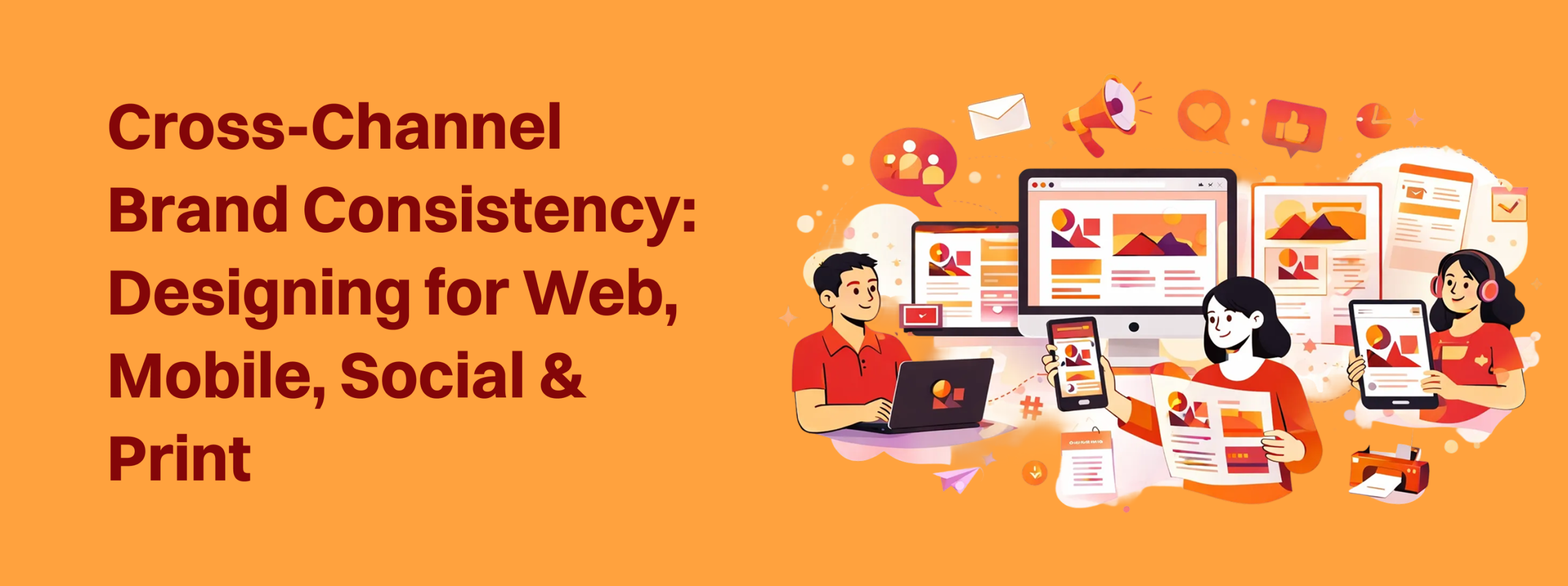
Your marketing team launches a polished new campaign. The landing page looks modern, animated, confident.Then the user signs up. Suddenly they land inside a product interface that feels five years older than the brand they just trusted.
Different colors. Different typography. Different interaction patterns. For many companies, this moment quietly kills trust. It is not a design problem. It is a systems problem.
As brands expand across AI search, social commerce, product ecosystems, marketplaces, and regional campaigns, consistency is no longer something you enforce with a PDF brand guide. It requires infrastructure. That is where multichannel brand design shifts from creative work to operational architecture. CMOs are no longer asking if consistency matters. They are asking how to build a brand system that survives real world speed.
Brand consistency is not a creative preference. It is a revenue lever. Consistent brand presentation typically leads to 23 percent to 33 percent revenue growth. But the financial impact goes deeper than recognition.
Inconsistent brands quietly create operational drag. Common symptoms include:
When brand systems break down, companies often spend 1.75 times more on advertising to achieve the same growth as a coherent competitor. The reason is simple. Recognition compounds. Confusion compounds faster. In B2B SaaS environments this is even more visible. If the marketing experience promises innovation but the product UI feels outdated, enterprise buyers interpret that mismatch as operational risk. The result is slower conversion and stalled deals. Coherence accelerates trust.
Most brand guidelines fail for one reason. They exist as static documents. A traditional brand PDF cannot survive the speed of modern product teams, global marketing teams, and social channels that change daily.
If guidelines are not integrated into the tools people actually use, they become shelfware. High performance brands now operate with dynamic brand hubs that connect:
Instead of rules, these systems provide reusable components. Instead of brand policing, they create automatic alignment. A modern brand system typically includes:
Design tokens convert brand elements into coded variables. For example:
These tokens can be exported into CSS or JSON and used directly in product development. This solves the classic marketing to product gap. When a color changes in the design system, it updates everywhere. Marketing, product interfaces, and campaign assets remain synchronized.
Modern brands behave less like logos and more like liquid identity systems. Recognition increasingly comes from elements such as:
A modular system allows these components to adapt across formats while preserving the core brand character. This approach reduces the operational load on creative teams. Instead of manually producing assets for every platform, teams recombine pre built components.
Brand governance often swings between two extremes. Too centralized and marketing teams become bottlenecks. Too decentralized and regional teams start improvising their own versions of the brand.
Both create problems.
Centralized models provide control but slow execution. Decentralized models move fast but dilute identity. The most effective organizations operate with a federated governance model.
In a federated structure: The central brand team controls the semantic layer, including:
Regional teams control the expression layer, including:
They operate within predefined guardrails. This structure preserves brand integrity while allowing teams to respond to real time opportunities.
Governance also requires clarity. A RACI matrix defines who is responsible, accountable, consulted, and informed for brand decisions. This prevents the common problem of “brand by committee”, which slows marketing execution and creates inconsistent decisions. When governance works well, creative teams move faster, not slower.
Technical teams understand technical debt. Brands suffer from a parallel problem: design debt. Design debt accumulates when teams take shortcuts to ship faster.
Examples include:
Eventually this debt starts impacting business performance.Common consequences include:
The only way to fix it is through a structured audit. A serious brand audit includes:
This phase often reveals something uncomfortable. The problem is rarely design taste. It is broken workflows.
This is why many organizations begin their rebrand journey with research driven diagnostics similar to what is explored in our UX research deep dive on the validation phase of a rebrand.
Without that insight, teams risk redesigning symptoms instead of solving the system.
In 2026, brand consistency is as much a data problem as a design one.Consider a typical omnichannel retail scenario. A customer sees a promotion on social media. They click through to the ecommerce site. The price is different. Product specifications are outdated. Returns spike. Customer support teams deal with the fallout. This problem originates from disconnected systems. To solve it, organizations need two core infrastructures.
A PIM system centralizes product specifications. Every channel pulls the same structured information including:
This ensures the same data appears across ecommerce, marketplaces, and campaigns.
A DAM system manages visual assets such as:
When PIM and DAM work together, companies create a single source of truth for both product data and brand visuals. For omnichannel commerce, this synchronization is critical. Brands operating across three or more synchronized channels often see dramatic revenue improvements, along with reduced customer service friction.
Multichannel brand systems are complex because they sit between strategy, design, and engineering. This is where agencies often step in not just as creative partners but as system architects.
Teams like Redbaton focus on translating brand strategy into operational frameworks that product teams and marketing teams can actually use. Their work on large scale digital ecosystems such as the Shikhar App demonstrates how consistent experiences can be delivered across fragmented supply chains and low bandwidth environments.
In other engagements with companies such as Tally and Airtel X Labs, the approach combines research driven insight with scalable design systems that allow fast moving sectors like fintech and AI platforms to evolve without losing identity.
The goal is not simply visual alignment. It is brand infrastructure.
Consistent brand presentation leads to an average revenue increase of 23 percent to 33 percent. Companies with strong design systems also report 34 percent faster time to market for campaigns and product features. In contrast, inconsistent brands often require 1.75 times more advertising spend to achieve comparable growth because recognition builds more slowly.
Centralized models offer high consistency but slow execution. Decentralized models move quickly but risk brand dilution. Most modern organizations succeed with a federated approach where the central team controls identity standards such as tokens and typography, while regional teams control campaign execution within defined guardrails.
Most guidelines are visual documents created for marketing teams. Product teams work with coded components. Without design tokens and shared component libraries, the two environments cannot stay synchronized. A systemic brand hub that connects design tools and code solves this gap.
Mergers require a full brand audit of both organizations to identify valuable brand equities. Companies then select a strategy such as fusion, stronger horse, or new brand. Governance frameworks and centralized asset management systems are critical to ensure outdated assets disappear quickly and new standards are adopted.
AI can damage creativity if used to generate generic branding. However it is extremely powerful for governance. AI tools can audit thousands of brand touchpoints, detect visual drift, check accessibility compliance, and monitor tone of voice. Used correctly, AI protects brand consistency at scale.
The biggest misconception in branding is that consistency means repetition.In reality, repetition creates rigidity.The brands that win today focus on coherence. They build systems that allow the brand to adapt across formats, channels, and cultures while still feeling unmistakably the same. That shift requires a different mindset. Architecture over aesthetics.
Systems over style guides. Infrastructure over campaigns.
If your brand guidelines cannot be used by developers, marketers, and regional teams simultaneously, they are not guidelines. They are decoration. If you are evaluating how to turn your brand into a scalable system that works across product, marketing, and emerging platforms, it may be time to rethink how your brand actually operates.


