











Jan 5, 2026
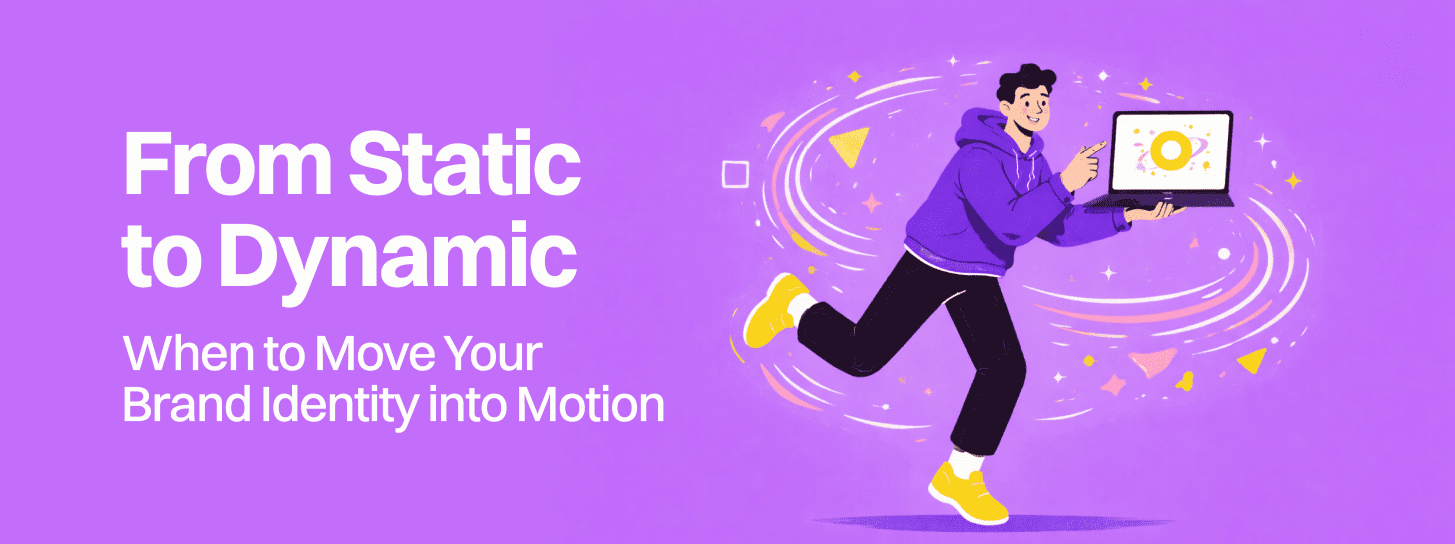
Static brand systems built for print and billboards fracture under digital demands—logos distort across screens, transitions feel disjointed, micro-interactions lack personality. Brand Directors at growth-stage companies face this reality as identities migrate into products and experiences. Motion branding emerges not as gimmickry, but as the logical evolution, infusing static assets with purposeful movement to unify recognition and enhance usability across ecosystems.
Motion branding extends visual identity into a dynamic system governing timing, rhythm, easing, and spatial behavior. Animated logos represent entry points; true motion encompasses brand motion principles like consistent bounce for playfulness or smooth deceleration for precision.
Distinctions matter:
Brand animations UX bridge this: A fintech’s deliberate easing reinforces trust during state changes, making motion inseparable from experience.
Brand Directors should audit for these triggers:
Delay signals stagnation: Static identities cap at awareness; motion drives affinity.
Movement imprints 20-30% more durably than statics, per cognitive psychology—rhythm creates proprietary signatures. Google’s Material Design motions became recall cues; brands replicate this via unique easing curves.
Timing mastery elevates: 200-400ms reveals build anticipation; elastic overshoots convey joy. Consistency compounds: Repeated physics across 100+ screens forge instant familiarity, lifting recall 15-25% in A/B tests.
Animated logos seal it—subtle builds on app splash screens anchor identity subconsciously.
Motion transcends decoration, guiding users surgically.
Feedback: Hover expansions confirm interactions; micro-shakes denote errors with personality.
Hierarchy: Sequential reveals prioritize content—fade H1 first, stagger body.
Guidance: Parallax scrolls direct focus; staggered lists imply sequence.
Cognitive benefits: Purposeful motion cuts perceived load 15-20%, per Nielsen Norman Group. Align with traits—crisp snaps for authoritative brands, organic flows for approachable ones.
Best practices for brand animations UX:
Link to motion design for implementation depth.
Framework for restraint:
| Element | Motion Recommended | Rationale |
| Logos | Yes (reveal/draw) | Builds familiarity |
| Transitions | Yes (shared axes) | Maintains spatial continuity |
| UI States | Yes (scale/fade) | Provides feedback |
| Icons | Selective | Only if functional (e.g., expand) |
| Typography | No/Minimal | Prioritizes legibility |
| Imagery | No | Avoids distraction |
Motion amplifies; overuse fatigues. Principle: Every animation serves recognition, guidance, or delight—audit quarterly.
Mature systems integrate motion natively. Enterprise SaaS layers micro-motions atop minimalist statics—subtle glows on CTAs reinforce premium feel without clutter.
Design systems document comprehensively: Figma libraries with motion variants; guidelines specifying “0.3s ease-out for all expansions.” Retail brands orchestrate storytelling sequences—product reveals syncing to narrative beats.
This elevates motion from tactic to identity pillar, scaling via tokens.
Mitigate: Embed motion tokens in design systems; prototype end-to-end before scale.
Motion branding marks evolution from static artifacts to living systems, essential for screen-first brands demanding cohesion and delight. Brand Directors who time it right amplify recognition, streamline UX, and future-proof identity.
Assess signals now—static suffices for billboards, not ecosystems. Dynamic capability separates leaders from laggards.


