Social media is an indelible part of our lives. In 2024, you cannot go a day, perhaps, without interacting with social media in one way or another. This makes the social media space a fertile ground for marketing and lead generation, and any business that wishes to advance and rake in profits knows that. This is where social media marketing services come in.
Whether you’re a beginner looking to dip your toes into social media as a marketing tool or a professional aiming to refine your skills, this comprehensive guide will help you navigate the essentials of marketing on social media and beyond. Social media marketing has become a pivotal aspect of digital marketing strategies, offering unparalleled opportunities to connect with audiences, build brands, and drive business growth and social media marketing services are at the forefront of making this possible.
What is Social Media Marketing (SMM)?
Social Media Marketing (SMM) involves leveraging social media platforms to promote products, services, or brands. It encompasses various activities, including content creation, audience engagement, advertising, and analytics, to achieve marketing goals. Social media marketing services are designed to help businesses effectively manage these activities and maximize their online presence.
The Key Components of Social Media Marketing
Social media has fast become an indispensable part of the marketing world. While social media marketing may have been initially dismissed as a gimmick, now sales are tied to the number of views a reel gets or post shares. Any attention is good attention has become the name of the game. However, before jumping into it, there are basics of social media that all social media marketing services know of.
1. Content Creation
Content Creation is the cornerstone of social media marketing, involving the development of engaging and relevant posts, images, videos, and stories tailored to each platform and audience.
- Types of Content:
- Text Posts: Short updates, announcements, and tips that provide valuable information or insights.
- Images: High-quality photos, infographics, and graphics that capture attention and convey messages visually.
- Videos: Engaging video content, including tutorials, product demos, behind-the-scenes looks, and live streams.
- Stories: Temporary content on platforms like Instagram and Facebook that provide a more personal and spontaneous connection with the audience.
- Blog Posts and Articles: In-depth pieces that educate, inform, and entertain the audience, often shared on platforms like LinkedIn and Facebook.
- User-Generated Content: Content created by followers or customers, such as reviews, testimonials, and social media posts, that adds authenticity and social proof.
- Best Practices:
- Consistency: Regularly posting content to keep the audience engaged and informed.
- Quality Over Quantity: Focusing on creating high-quality, valuable content rather than overwhelming the audience with frequent but less impactful posts.
- Platform-Specific Content: Tailoring content to fit the unique features and audience of each social media platform.
- Visual Appeal: Using eye-catching visuals to make content stand out in crowded feeds.
- Call to Action (CTA): Encouraging audience interaction with clear CTAs, such as
-
Audience Engagement
Audience Engagement involves interacting with followers through comments, messages, and social media groups to build relationships and foster a loyal community.
- Methods of Engagement:
- Responding to Comments and Messages: Acknowledging and replying to audience comments and direct messages promptly to show that their input is valued.
- Hosting Q&A Sessions: Using live streams or posts to answer audience questions in real-time, providing valuable insights and fostering interaction.
- User-Generated Content: Encouraging followers to create and share content related to the brand, increasing engagement and authenticity.
- Polls and Surveys: Conducting polls and surveys to gather feedback and opinions from the audience.
- Contests and Giveaways: Running contests and giveaways to boost engagement and reward loyal followers.
- Best Practices:
- Active Listening: Paying attention to audience feedback and responding appropriately.
- Personalization: Addressing audience members by name and personalizing interactions to make them feel valued.
- Timeliness: Engaging with the audience promptly to maintain relevance and interest.
- Transparency: Being open and honest in communications to build trust and credibility.
3. Advertising
Advertising on social media involves running targeted ads to reach specific demographics and drive conversions. It leverages the extensive data available on social media platforms to deliver ads to the right audience.
- Types of Social Media Ads:
- Sponsored Posts: Boosting regular posts to reach a larger audience.
- Display Ads: Banner ads that appear on the sides or within the content feed.
- Video Ads: Short promotional videos that appear in users’ feeds or before video content.
- Carousel Ads: Ads that allow multiple images or videos in a single ad, providing a richer storytelling experience.
- Story Ads: Full-screen ads that appear between user stories on platforms like Instagram and Snapchat.
- Shoppable Ads: Ads that include links to purchase products directly from the ad.
- Best Practices:
- Targeting: Utilizing demographic, geographic, and behavioral targeting to reach the right audience.
- A/B Testing: Running multiple versions of an ad to see which performs better.
- Clear CTA: Including a clear and compelling call to action to guide users on what to do next.
- Monitoring and Optimization: Continuously monitoring ad performance and making adjustments to improve results..
4. Analytics
Analytics involves monitoring and analyzing performance metrics to refine strategies and improve results. It provides insights into how well social media efforts are performing and identifies areas for improvement.
- Key Metrics to Track:
- Reach: The number of unique users who have seen your content.
- Impressions: The total number of times your content has been displayed.
- Engagement: The number of interactions (likes, comments, shares) your content receives.
- Click-Through Rate (CTR): The percentage of users who click on a link in your content.
- Conversion Rate: The percentage of users who take a desired action, such as making a purchase or signing up for a newsletter.
- Sentiment Analysis: The overall sentiment of user comments and interactions, whether positive, neutral, or negative.
- Best Practices:
- Regular Monitoring: Consistently track key metrics to stay informed about performance.
- Data-Driven Decisions: Use data insights to inform strategy adjustments and optimizations.
- Benchmarking: Compare performance against industry benchmarks and past performance to gauge success.
- Reporting: Create regular reports to share insights and progress with stakeholders.
By leveraging these key components, businesses can enhance their social media marketing efforts, engage effectively with their audience, and achieve their marketing goals more efficiently.
What are Different Social Media Marketing Platforms?
Numerous platforms cater to different audiences and marketing strategies. Understanding each platform’s unique characteristics is crucial for effective social media marketing:
-
Facebook
- Overview: Largest social media platform with a diverse user base.
- Features: Pages, Groups, Marketplace, and Facebook Ads.
- Best for: Community building, advertising, and customer engagement.
- Pros: Wide reach, robust advertising tools, strong analytics.
- Cons: Algorithm changes can impact organic reach, competition for attention.
-
Instagram
- Overview: Visual-centric platform popular among younger demographics.
- Features: Stories, IGTV, Reels, and Instagram Shopping.
- Best for: Brand awareness, influencer marketing, and visual storytelling.
- Pros: High engagement rates, strong visual appeal, influencer partnerships.
- Cons: Requires consistent and high-quality visual content, algorithm changes.
-
Twitter
- Overview: Microblogging platform known for real-time updates.
- Features: Tweets, Threads, Trends, and Twitter Ads.
- Best for: News sharing, customer service, and viral marketing.
- Pros: Real-time communication, trending topics, hashtag campaigns.
- Cons: Limited post length, fast-paced content turnover.
-
LinkedIn
- Overview: Professional networking site for B2B marketing.
- Features: Profiles, Company Pages, LinkedIn Learning, and LinkedIn Ads.
- Best for: Professional networking, B2B marketing, and industry insights.
- Pros: Professional audience, robust B2B marketing tools, networking opportunities.
- Cons: Higher cost per click for ads, niche audience.
-
Pinterest
- Overview: Visual discovery engine for finding ideas and inspiration.
- Features: Pins, Boards, and Pinterest Ads.
- Best for: Visual content marketing, DIY projects, and e-commerce.
- Pros: High user engagement, strong visual focus, e-commerce integration.
- Cons: Requires visually appealing content, niche audience.
-
TikTok
- Overview: Short-form video platform with a rapidly growing user base.
- Features: Challenges, Duets, and TikTok Ads.
- Best for: Viral marketing, creative content, and targeting younger audiences.
- Pros: High engagement rates, potential for viral content, young audience.
- Cons: Requires continuous content creation, short content lifespan.
Understanding the strengths and weaknesses of each platform can help businesses tailor their social media strategies to effectively reach and engage their target audiences.
What are Social Media Marketing Services?
Social media marketing services encompass a range of offerings designed to help businesses effectively manage their social media presence. These services can be tailored to meet specific business needs and objectives.
-
Strategy Development
- Overview: Crafting a comprehensive social media strategy aligned with business goals.
- Features: Market research, goal setting, and content planning.
- Pros: Clear direction, targeted efforts, measurable goals.
- Cons: Requires ongoing adjustments, time-consuming.
-
Content Creation and Management
- Overview: Producing and scheduling engaging content across platforms.
- Features: Content calendars, multimedia production, and platform-specific posts.
- Pros: Consistent posting, professional content, tailored messaging.
- Cons: Resource-intensive, requires creativity and expertise.
-
Community Management
- Overview: Engaging with followers, managing comments, and fostering community growth.
- Features: Comment moderation, direct messaging, and community building activities.
- Pros: Stronger relationships, increased engagement, customer feedback.
- Cons: Time-intensive, potential for negative interactions.
-
Advertising Campaigns
- Overview: Creating and managing targeted ad campaigns to reach specific audiences.
- Features: Audience targeting, ad creation, and performance tracking.
- Pros: Precise targeting, scalable, measurable results.
- Cons: Requires budget, can be complex to manage.
-
Analytics and Reporting
- Overview: Monitoring performance metrics and providing insights for continuous improvement.
- Features: Performance dashboards, monthly reports, and data analysis.
- Pros: Data-driven decisions, track progress, identify trends.
- Cons: Requires analytical skills, can be overwhelming.
-
Influencer Marketing
- Overview: Collaborating with influencers to expand reach and credibility.
- Features: Influencer identification, partnership management, and campaign execution.
- Pros: Increased trust, expanded reach, authentic promotion.
- Cons: Finding the right influencers, potential for high costs.
-
Social Media Audits
- Overview: Evaluating current social media efforts and identifying areas for improvement.
- Features: Performance assessment, competitor analysis, and actionable recommendations.
- Pros: Clear insights, identify gaps, improve strategy.
- Cons: Can be time-consuming, requires expertise.
By leveraging these services, businesses can enhance their social media presence, engage effectively with their audience, and achieve their marketing goals more efficiently.
Social Media Marketing Strategies

Successful social media marketing requires well-thought-out strategies. Here are some effective strategies to consider:
-
Define Clear Goals
- Brand Awareness: Increase visibility and reach.
- Lead Generation: Attract potential customers.
- Engagement: Foster interactions with your audience.
- Sales: Drive conversions and revenue.
- Pros: Focused efforts, measurable outcomes, aligned with business objectives.
- Cons: Goals may need adjustment over time, requires regular monitoring.
-
Know Your Audience
- Demographics: Age, gender, location, and interests.
- Behavior: Online habits and preferred content types.
- Needs and Pain Points: What problems can your product/service solve?
- Pros: Targeted messaging, improved engagement, better results.
- Cons: Requires research, audience preferences can change.
-
Content Planning and Creation
- Content Calendar: Plan posts in advance for consistency.
- Variety: Use a mix of text, images, videos, and stories.
- Value-Driven: Provide content that educates, entertains, or solves problems.
- Pros: Consistent posting, diverse content, audience value.
- Cons: Time-consuming, requires creativity and planning.
-
Engage and Interact
- Respond to Comments: Show that you value your audience’s feedback.
- Host Q&A Sessions: Engage directly with your followers.
- User-Generated Content: Encourage followers to create and share content.
- Pros: Increased engagement, stronger relationships, user trust.
- Cons: Requires constant attention, potential for negative interactions.
-
Utilize Analytics
- Track Performance: Use platform analytics to monitor metrics.
- Adjust Strategies: Refine your approach based on data insights.
- A/B Testing: Experiment with different content and ad formats.
- Pros: Data-driven decisions, continuous improvement, optimized performance.
- Cons: Requires analytical skills, data overload.
Implementing these strategies can help businesses build a robust social media presence, engage effectively with their audience, and achieve their marketing objectives.
Most Used Social Media Marketing Tools
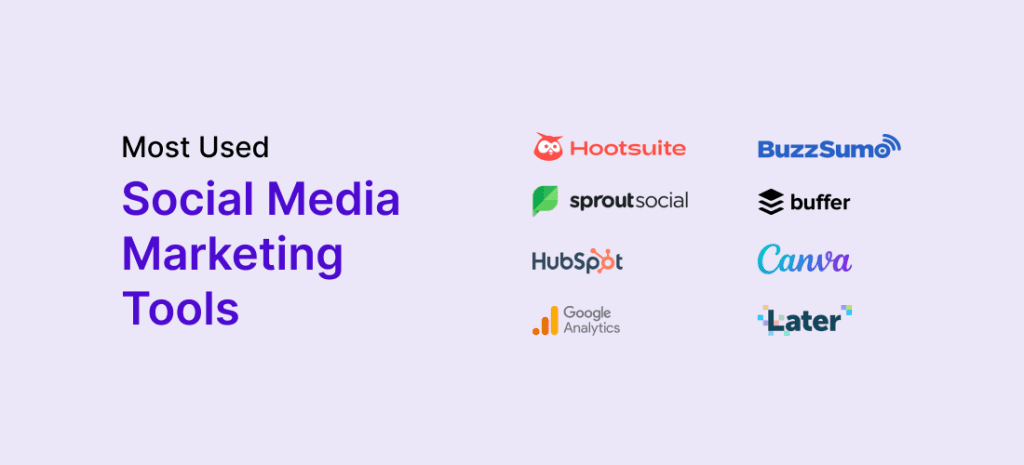
To execute these strategies effectively, various tools are available to streamline processes and enhance results:
-
Hootsuite
- Features: Social media scheduling, monitoring, and analytics.
- Best for: Managing multiple social media accounts from one dashboard.
- Pros: Centralized management, time-saving, robust analytics.
- Cons: Can be expensive for larger teams, learning curve for new users.
-
Buffer
- Features: Post scheduling, analytics, and team collaboration.
- Best for: Simplified scheduling and performance tracking.
- Pros: User-friendly interface, affordable pricing, strong customer support.
- Cons: Limited features in lower-tier plans, no direct Instagram posting.
-
Sprout Social
- Features: Social media management, customer engagement, and analytics.
- Best for: Comprehensive social media management and reporting.
- Pros: Detailed analytics, strong engagement tools, excellent support.
- Cons: Higher cost, can be complex for beginners.
-
Canva
- Features: Graphic design tool with templates for social media posts.
- Best for: Creating visually appealing content quickly.
- Pros: Easy to use, extensive template library, affordable.
- Cons: Limited functionality for advanced design needs, requires internet access.
-
BuzzSumo
- Features: Content research and influencer identification.
- Best for: Discovering trending topics and finding key influencers.
- Pros: Comprehensive content insights, effective influencer identification.
- Cons: Expensive for small businesses, limited functionality without a subscription.
-
Google Analytics
- Features: Website traffic tracking and user behavior analysis.
- Best for: Measuring the impact of social media on website traffic.
- Pros: Detailed insights, free to use, integrates with other tools.
- Cons: Steep learning curve, requires setup and configuration.
-
Later
- Features: Visual content calendar, post scheduling, and analytics.
- Best for: Instagram marketing and visual content planning.
- Pros: Easy drag-and-drop interface, visually focused, detailed analytics.
- Cons: Limited features in free plan, additional cost for premium features.
-
HubSpot
- Features: Social media management, CRM integration, and analytics.
- Best for: Comprehensive marketing automation and CRM integration.
- Pros: All-in-one marketing solution, robust CRM features, detailed analytics.
- Cons: High cost for full features, complexity for beginners.
These tools provide valuable assistance in managing, analyzing, and optimizing social media marketing efforts, allowing businesses to achieve better results with less effort.
Benefits of Social Media Marketing
Social media marketing offers numerous benefits that can significantly impact your business:
-
Increased Brand Awareness
- Reach a larger audience and enhance brand recognition.
- Establish a strong online presence.
- Pros: Broader reach, improved brand recall, increased visibility.
- Cons: Requires consistent effort, potential for negative feedback.
-
Improved Customer Engagement
- Build relationships with your audience through direct interactions.
- Foster a loyal community around your brand.
- Pros: Stronger customer relationships, increased loyalty, valuable feedback.
- Cons: Time-intensive, requires active management.
-
Cost-Effective Marketing
- Lower costs compared to traditional advertising methods.
- Flexible budgeting options for ad campaigns.
- Pros: Affordable, scalable, measurable ROI.
- Cons: Requires strategic planning, potential for high competition.
-
Enhanced Customer Insights
- Gain valuable insights into customer preferences and behaviors.
- Use data to refine marketing strategies.
- Pros: Data-driven decisions, improved targeting, better understanding of audience.
- Cons: Requires analytical skills, data privacy concerns.
-
Higher Conversion Rates
- Drive traffic to your website and increase sales.
- Use targeted ads to reach potential customers more effectively.
- Pros: Increased sales, improved ROI, precise targeting.
- Cons: Requires budget for ads, potential for ad fatigue.
By leveraging these benefits, businesses can enhance their marketing efforts, improve customer relationships, and achieve their business objectives more effectively.
Conclusion
Social media marketing is an ever-evolving field that offers incredible opportunities for businesses to connect with their audience, build brand loyalty, and drive growth. By understanding the fundamentals of social media marketing, leveraging the right platforms, and employing effective strategies and tools, you can create a powerful online presence.
At Red Baton, we are committed to helping you navigate the complexities of social media marketing with ease. Whether you’re just starting or looking to enhance your existing efforts, our expertise and innovative solutions can guide you to success. Embrace the future of marketing and unlock your brand’s potential with Red Baton’s industry-leading social media marketing services. Let’s build something remarkable together!