











Apr 2, 2025
The modern landscape of product development has undergone a fundamental shift from the rigid, engineering-centric “waterfall” models of the late twentieth century to a multi-dimensional, design-led ecosystem where narrative and user experience dictate market survival. For founders, product leaders, and marketing heads, the challenge of the current era is no longer the technical feasibility of building a product—given the ubiquity of cloud infrastructure and generative tools—but rather the strategic alignment of ideation, definition, and execution with a validated and deeply understood market need. Research indicates a stark reality for the startup ecosystem: between 80% and 95% of new products fail within their first year, primarily because they are engineered in a vacuum, neglecting the critical intersection of user behavior and business viability.
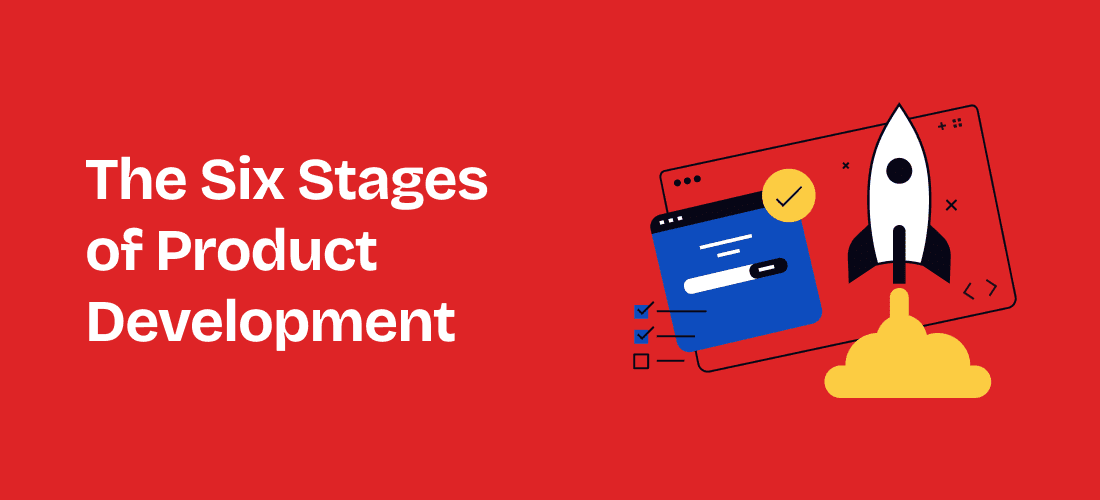
To mitigate these risks, the structured six-stage model of product development provides a foundational blueprint for transforming a nascent concept into a scalable, revenue-generating asset. This report explores these stages through the lens of a senior design agency workflow, emphasizing the “Double Diamond” approach that alternates between divergent exploration and convergent refinement. This methodology ensures that every design decision is grounded in a “rabid obsession” with creating work people care about, moving beyond mere utility to achieve profound brand connection.
The transition from a standard industrial model to a modern agency workflow represents a move from output-focused delivery to outcome-focused strategy. Traditional models often prioritize the completion of a pre-defined feature list, viewing design as a cosmetic “layer” applied at the end of the development cycle. In contrast, a design-led agency workflow, such as that practiced in the Bengaluru tech hub, treats design as an immersive strategic immersion into the business vision itself.
| Dimension | Standard Industrial Model | Modern Agency Workflow |
| Primary Driver |
Engineering feasibility and feature count |
Narrative, UX, and business ROI |
| Development Style |
Sequential/Waterfall (Stage-Gate) |
Iterative, sprint-based, and Agile |
| User Involvement |
Post-launch feedback surveys |
Early anthropological observation and co-creation |
| Risk Mitigation |
Quality assurance at the end of the cycle |
Early problem validation and prototyping |
| Market Entry |
Minimum Viable Product (MVP) – functional focus |
Minimum Awesome Product (MAP) – emotional focus |
This shift is crucial because products that undergo at least three prototype iterations are 50% less likely to fail in the market. The modern workflow recognizes that “wicked problems”—those with no clear stopping rules or right/wrong answers—will not be understood until a solution has been attempted, which in turn creates new insights and new problems to solve.
The genesis of a successful product lies not in the “coolness” of the idea, but in the depth and frequency of the problem it addresses. Ideation is the creative process of generating, developing, and refining concepts based on customer pain points and market trends. However, senior practitioners caution against “random ideation,” which lacks specific direction and often leads to the implementation of ideas that have already been exhausted or are not aligned with market reality.
A critical failure for many founders is the assumption that their own needs represent a universal market. To combat this “founder’s bias,” the ideation stage must adopt an anthropological approach. This involves scientific observation of user behavior to identify needs that customers themselves cannot articulate—the famous “faster horses” dilemma attributed to Henry Ford.
True innovation satisfies actual needs, not what consumers say they need in a focus group. The anthropology of business suggests that listening to feature requests can lead to building “more of the same,” while observing how people act in their natural environment—through contextual inquiry—uncovers the “invisible” friction points that represent true market opportunities.
Professional agencies utilize specific frameworks to force cognitive shifts and break out of incremental thinking :
The SCAMPER Method: This involves substituting, combining, adapting, modifying, putting to another use, eliminating, or rearranging product concepts. By systematically applying these “levers,” teams can rethink a legacy product into a disruptive new category.
First Principles Thinking: popularized by figures like Steve Jobs and Elon Musk, this involves stripping away all unnecessary elements and asking, “What would this look like if I started from zero?”.
Design Studio Methodology: This is an intense, multidisciplinary ideation session that brings together engineering, design, and marketing to generate a range of potential solutions. This prevents the “genius designer” trap by ensuring all technical and business constraints are considered from the first hour.
Early-stage founders often believe their product is for “everyone,” which is a significant red flag for investors and strategists. Broad targeting leads to diluted messaging and expensive marketing efforts that fail to resonate. Instead, the ideation stage must define a “beachhead”—the first 100 customers who will win first, allowing the product to solve a specific problem perfectly before expanding to adjacent verticals.
Once a problem-solution fit is hypothesized, the product must be rigorously defined. This stage turns the initial concept into a clear product strategy with defined requirements, success metrics, and a go-to-market plan. Product definition is the bridge between the “what” and the “how,” and skipping it is the fastest way to burn through seed capital.
The value proposition is the core of the product definition. It specifies exactly why the product matters and how it differs from every other solution in the market. In high-technical-depth sectors like AI SaaS or FinTech, the value proposition must translate complex technical capabilities into simple, high-conversion visual narratives. For instance, a proposition like “Powerful platform for teams” fails because it is generic, whereas “Turn support tickets into insights in 3 clicks for SaaS teams” succeeds by defining the outcome, the audience, and the specific pain point addressed.
Defining the business model is as much a creative process as designing the interface. Tools like the Lean Canvas or Business Model Canvas are used to document the business case, revenue streams, and pricing models. This ensures that the founder is not just building a “project” but a sustainable system that supports growth, pricing, and customer acquisition.
| Component | Strategic Goal | Deliverables |
| Competitive Analysis |
Identifying market gaps and incumbent weaknesses |
Competitor Matrix, SWOT Analysis |
| KPI Definition |
Establishing measurable success indicators early |
Conversion goals, engagement targets, NPS benchmarks |
| Technical Roadmap |
Aligning engineering effort with business milestones |
Visual roadmap (Aha!/ProductPlan), MVP scope |
| Persona Development |
Moving from demographics to behavioral models |
Proto-personas, Jobs-to-be-Done (JTBD) maps |
A successful product definition requires the “Product Triad”—Design, Engineering, and Product Management—to be in lockstep. Vague specifications lead to team arguments and features built “just in case,” which demoralizes developers and delays launch. A structured Product Requirements Document (PRD) or a two-page brief is often necessary to provide the clarity needed for the next stage.
In the traditional six-stage model, prototyping is often viewed as a functional test. However, in a competitive landscape, the concept of the Minimum Viable Product (MVP) as originally popularized—a bare-bones version of a product—is increasingly seen as insufficient or even “dead”.
The transition from MVP to Minimum Awesome Product (MAP) or Minimum Lovable Product (MLP) reflects a shift in consumer expectations. Users are no longer willing to tolerate clunky, “minimal” experiences just because a product is new. The MAP prioritizes design, emotion, and polished UX from the first commit, ensuring that early adopters don’t just use the product but become advocates for it.
| Feature | Traditional MVP | Modern MAP / MLP |
| Primary Goal |
Functional validation |
User delight and emotional connection |
| Design Quality |
Low-fidelity / “Good enough” |
High-fidelity / Polished brand identity |
| User Retention |
Variable; high risk of “bounce” |
Targeted at 89% or higher retention |
| Approach |
“Build it fast and break it” |
“Build it right to grow it” |
The prototyping stage is where the product’s visual style and interaction patterns are codified. Modern agencies implement mature design systems—using frameworks like Ant Design, Material UI (MUI), or Shadcn—to ensure consistency and scalability. A well-built design system acts as a shared language between design and engineering, potentially reducing design-to-development handoff time by up to 50%.
Prototyping also serves as a critical guardrail against “CAD-model optimism”. Founders often assume that because a feature works in a mock-up, it can be manufactured or coded at scale. In the hardware space, this might involve checking injection molding tolerances; in software, it involves identifying if the proposed logic requires API integrations that are slow, insecure, or prohibitively expensive. Skipping this validation often results in 100x the cost to fix a fundamental architectural flaw post-launch.
The development phase is where the “vibe” becomes “code”. For startup leaders, this stage presents a perpetual dilemma: should they prioritize speed to market to capture a fleeting opportunity, or ensure top-notch quality to build long-term credibility?.
To navigate this tension, successful companies adopt Agile and DevOps methodologies. Agile allows for building incrementally, gathering feedback in one-week sprints, and maintaining flexibility as the product scales. DevOps integrates the development and operations teams, ensuring that issues are spotted early and that the “spaghetti code” common in rushed startups does not become a technical liability.
High-performing teams often utilize Test-Driven Development (TDD), where tests are created before the implementation of code. This “Red, Green, Refactor” cycle—creating a failed test, passing it, and then refactoring the code—minimizes bugs and ensures that every feature meets its specific requirements from day one. While some argue that TDD can slow down initial development, it significantly reduces the time spent on post-launch “firefighting” and technical debt.
The emergence of sophisticated no-code and low-code platforms (Webflow, Bubble, Supabase) has revolutionized the development stage for non-technical founders. No-code is excellent for rapid market validation, reducing development time from months to weeks. However, as products reach enterprise-level complexity or require highly specialized business logic, the inherent limitations of these platforms—such as technological lock-in and high cost-per-user—often necessitate a migration to custom code.
| Metric | No-Code Development | Custom Software Development |
| Initial Cost |
Very Low |
High (due to specialized labor) |
| Deployment Speed |
Extremely Fast (days/weeks) |
Moderate (months) |
| Customization |
Limited to platform components |
Unlimited flexibility |
| Scalability |
Built-in but capped at enterprise levels |
Highly scalable through custom architecture |
| Ownership |
Platform dependency (Lock-in) |
Full sovereignty over IP and source code |
A new paradigm, often termed “vibe coding,” involves using LLM-powered interfaces (like Cursor, Lovable, or Bolt) to describe a product’s functionality and have the AI generate production-ready React or Tailwind code. While this dramatically accelerates the “blank screen” phase, it requires human curation to manage AI “hallucinations” and to ensure that data security rules (like Row Level Security) are configured correctly.
The testing stage is the core engine of the Lean Startup approach, characterized by the “Build-Measure-Learn” loop. It is a disciplined cycle for turning assumptions into validated knowledge.
The cost of failure is non-linear. Research from the NIST and other research bodies demonstrates that fixing a bug post-launch can cost up to 100 times more than fixing it during the design phase. This “10x rule of pain” applies not just to financial costs but also to brand reputation and user trust.
| Development Phase | Cost to Fix Bug / Flaw | Impact Level |
| Design |
$1x$ |
Minimal; “Back to the drawing board” |
| Development |
$6x$ |
Annoying but manageable |
| Testing |
$15x$ |
Starting to hurt; rework required |
| Production (Post-Launch) |
$100x – 1,000x$ |
Catastrophic; rewrite/recalls/lawsuits |
A successful testing phase balances quantitative data (analytics) with qualitative insights (user feedback).
AARRR Framework: This metric-driven approach tracks Acquisition, Activation, Retention, Referral, and Revenue to identify drop-off points in the user journey.
Usability Testing: Conducting tests with as few as 5 participants can discover 85% of usability issues. The goal is to observe where users struggle rather than asking them what they think.
A/B Testing: This allows for rapid experimentation with different features or messaging to see which variant drives better conversion.
The “Learn” phase of the loop culminates in a crucial strategic decision: should the team continue refining the current product (persevere) or change a fundamental dimension of the business model (pivot)?. This decision must be grounded in actionable metrics, not “vanity metrics” like total signups or social media followers which do not reflect the true viability of the product.
The launch is not the final step but the beginning of the product’s life in the real world. A fantastic product will fail without a strong GTM strategy that ensures customers understand what it is and why it matters.
Red Baton’s core philosophy—”Stories make brands”—is most critical during the launch phase. Every brand has a story that needs to be woven into a tale that connects with the target audience. This involves high-impact digital campaigns, professional photography that showcases products in the “right light,” and motion graphics that simplify complex concepts for the market.
A significant trend in 2025 is the transition to self-serve revenue models. Research indicates that companies with intentional self-serve motions report:
68% profitability rates compared to 36% for those without.
25.9% better free-to-paid conversion rates.
18.3% faster time-to-value delivery.
This forces product experience improvements because the product must be intuitive enough for a user to adopt it without human assistance from a salesperson or customer success manager.
The production launch must be followed by a post-launch audit. Many redesigns fail because companies change URLs without setting up redirects, leading to a 40% drop in organic traffic overnight. A conversion-focused launch must include an SEO plan from day one, ensuring that the new site or app is not just beautiful but discoverable.
Design is no longer an expense; it is a measurable growth lever. Companies that lead with design consistently outperform the S&P 500 by as much as 228% over a ten-year period.
| Metric | Business Impact | Data Point |
| Conversion Rate Optimization (CRO) | Increases revenue from existing traffic |
Up to 250% increase |
| Churn Reduction | Improves customer lifetime value (CLV) |
89% retention in design-led firms |
| Development Rework | Reduces engineering waste |
50% reduction in rework time |
| Task Completion Rate | Improves user efficiency and satisfaction |
35% improvement via UX redesign |
| Shareholder Return | Higher market rewards for differentiation |
56% higher total returns |
In data-intensive sectors like cybersecurity or FinTech, design-led growth results in 85% fewer false positive alerts and a 45% faster Mean Time to Detect (MTTD), directly impacting the customer’s bottom line.
Bengaluru (Bangalore) has emerged as a critical node in the global technology network, offering a unique “synergistic relationship” with Silicon Valley. While Silicon Valley provides advanced technology and late-stage capital, Bengaluru provides an affordable engineering workforce and a gateway to the expanding digital markets of the Global South.
The cost disparity is staggering: a software engineer in Bengaluru earns an average of $12,000 annually, compared to $125,000 in Silicon Valley. This allows founders to build and iterate with significantly lower “burn”. However, the city faces challenges such as infrastructure congestion and a “brain drain” of skilled professionals to overseas markets. To combat this, elite studios in Bengaluru focus on creating “insanely great” work cultures that emphasize independent thinking and deeper problem-solving.
Traditionally, Bengaluru was viewed as a service-based ecosystem focused on stability. However, the recent influx of venture capital has imported the Silicon Valley “fail fast” mantra, encouraging rapid iteration and disruptive product development. Agencies like Red Baton embody this shift, providing “turnkey” solutions that blend world-class UI/UX with a methodical, sprint-based workflow that meets global standards.
For product leaders aspiring to the C-suite (Chief Product Officer or CEO), understanding the technical stages of development is only the beginning. It requires a shift toward enterprise-wide thinking and financial acumen.
To communicate value to the board, product leaders must use language that resonates with business objectives.
| Competency | Functional Keyword | Strategic Outcome |
| Strategic Planning |
Formulated / Orchestrated |
Aligning product goals with 5-year roadmaps |
| Performance Optimization |
Optimized / Refined |
Increasing margins or conversion funnels |
| Risk Management |
Validated / Prototyped |
Reducing the 100x cost of post-launch failure |
| Revenue Growth |
Scaled / Monetized |
Linking UX improvements to ARR and CLV |
| Stakeholder Management |
Articulated / Synthesized |
Translating technical complexity for the board |
The most successful leaders often challenge the “dogma” of product development:
Taste over Data: While data is crucial, experts like those at Apple argue that intuition and “taste” are the most underrated product design skills. Over-reliance on user research can lead to “design by committee,” which averages out innovation into mediocrity.
Don’t Listen to Customers: Disruptive innovation often comes from within, not from focus groups. Listening to customers leads to incremental improvements (“faster horses”); observing their behavior like an anthropologist leads to the next smartphone.
The Inversion Principle: Thinking about how to make a product worse can spark original thought patterns on how to improve it, breaking the cognitive ruts that prevent breakthrough design.
The six stages of product development—Ideation, Definition, Prototyping, Development, Testing, and Launch—form a continuous cycle rather than a linear path. The traditional focus on “technical feasibility” has been superseded by a mandate for “emotional desirability” and “narrative alignment”.
For founders and marketing heads, the primary takeaway is that skipping the “boring homework” of problem validation and product definition is the leading cause of startup mortality. Investing in high-quality design early is not a luxury; it is a risk-mitigation strategy that reduces development rework by 50% and increases conversion by up to 400%.
As the tech landscape becomes more distributed, the synergy between hubs like Silicon Valley and Bengaluru will define the next decade of innovation. Those who can combine global capital and technical standards with local cost-efficiencies and narrative-driven branding will be the market leaders of 2025 and beyond. The “Death of the MVP” signifies the birth of a more mature, design-led era where every product must be “insanely great” from the first day of its life.
Success in modern product development requires a commitment to the following principles:
Validate Before You Build: Conduct 10–20 structured user interviews before writing code.
Prioritize the MAP over the MVP: Aim for user delight and emotional connection to ensure retention.
Implement a Design System: Build a shared language between designers and developers to reduce handoff friction by 50%.
Embrace the Build-Measure-Learn Loop: Use the AARRR framework to turn data into validated learning and strategic pivots.
Invest in Narrative: Every brand is a story; use motion graphics and professional photography to convey that story with “rabid obsession”.
The evolution of the product development lifecycle reflects a broader shift toward human-centered innovation. By adhering to a structured six-stage model and infusing it with senior design strategy, founders can navigate the “wicked problems” of the market to deliver products that not only work but endure.


