










Dec 23, 2025
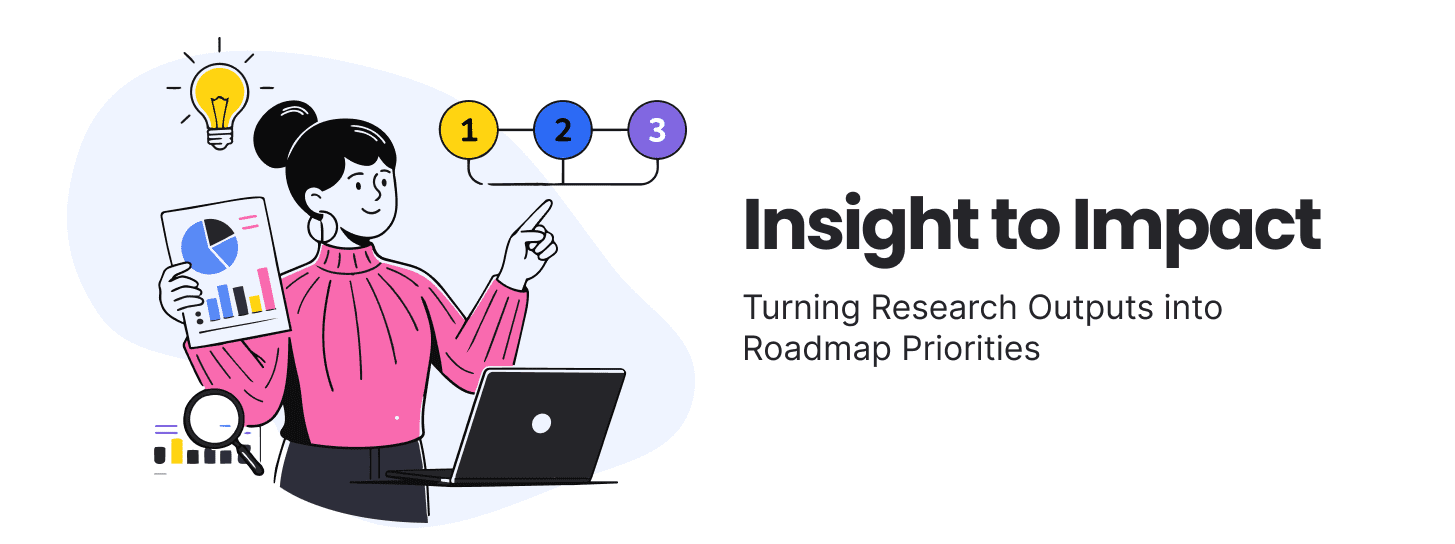
In the high-stakes environment of digital product development, the distance between a raw user insight and a prioritized roadmap item often represents the difference between market leadership and obsolescence. For founders, product leaders, and decision makers, the modern challenge is not the acquisition of data, but the strategic translation of that data into tangible business outcomes. Research initiatives frequently generate what is termed a “mountain of data,” yet a significant portion of these outputs remains unutilized, trapped in static reports that fail to influence the trajectory of the product. This systemic failure stems from a disconnect between the discovery process and the operational mechanics of the product roadmap.
The design agency Redbaton, founded in 2015, operates on the principle that true innovation requires a synthesis of science, design, and emotion. This philosophy recognizes that while data provides the foundation, it is the strategic interpretation and alignment with business goals that drive impact. To navigate this complexity, product leaders must adopt a “Discovery-First” approach that grounds every feature request in solid insight from the outset. This prevents the development of features that users do not actually need, thereby significantly reducing development waste and maximizing the return on research investment.
The “Insight to Impact” framework serves as the necessary bridge. It moves the organization away from reactive development—where priorities are shaped by the “loudest voice in the room” or immediate commercial instincts—toward a proactive model where every roadmap bet is supported by validated user needs. This transformation requires a fundamental shift in how research is framed, conducted, and integrated into the product lifecycle.
Transforming research from an academic exercise into a strategic engine requires a methodical process. This four-phase framework ensures that insights are not just “discovered” but are actively “deployed” to shape the product’s future.
The first phase involves the distillation of qualitative and quantitative findings into specific, interpretable insights. Raw data—whether from usability sessions, stakeholder interviews, or analytics—is inherently neutral. It becomes strategic intel only when it is interpreted for its practical application to the product. For example, the discovery that users struggle with a specific onboarding flow is a data point; the insight is the realization that users lack the domain expertise assumed by the interface, creating a cognitive barrier to entry.
During this phase, the use of archetypes is highly effective. Rather than presenting a sea of individual feedback, researchers develop profiles—such as the four advertiser archetypes utilized by the Financial Times—to capture distinct mindsets and goals. These archetypes provide a shared language for the team, making it easier for designers and product managers to “step into the users’ shoes” and evaluate potential features against specific user needs.
Once insights are crystallized, they must be ranked and organized. This is where the Roadmap Prioritization Scorecard becomes indispensable. Prioritization is a core competency for any successful Head of Product, yet it is often the most daunting part of the process. By using structured frameworks, teams can determine which features or fixes will provide the most significant business impact and user benefit.
The prioritization process must be realistic and feasible from an engineering perspective. It involves mapping the current customer journey and flagging “moments that matter”—those critical touchpoints where friction can lead to churn or where a seamless experience can drive loyalty. The output of this phase is a realistic backlog of improvements with clear success definitions, such as “reducing cart abandonment by 15%” rather than vague goals like “improving checkout”.
The third phase focuses on justification and accountability. A core pillar of the Redbaton approach is ensuring that research investment leads to a direct link between data and final product decisions. This reduces the risk of “feature bloat” and ensures the team is solving root causes rather than symptoms.
To measure this, teams should track the “ripple effect” of research. This involves moving away from measuring “studies completed” toward measuring “decisions influenced”. This shift in perspective ensures that the research team is viewed as a strategic partner rather than a service provider. By logging the research input for every major feature—Stage, Research Input, Owner, Decision, and Outcome—the organization creates a live data stream that supports ongoing product bets.
The final phase ensures that the product roadmap is not just a wishlist of features but a strategic document aligned with the company’s vision and executive goals. This requires securing leadership buy-in and establishing a cross-functional governance model. Decisions must not stall in the “alignment twilight zone”; instead, they should be driven by a cadence of regular steering sessions and working groups.
Alignment also involves ensuring consistency with legacy systems and forward-looking strategic technologies. Every design and product decision must be viewed through the lens of the brand’s unique voice and tone, ensuring that the user experience remains coherent and builds trust over time.
| Framework Phase | Key Objective | Primary Output |
| Translation | Convert raw data into actionable interpretations. |
Strategic archetypes and problem statements. |
| Prioritization | Rank opportunities by impact and feasibility. |
Prioritized backlog and roadmap. |
| Validation | Link research directly to product decisions. |
Decision log and impact metrics. |
| Alignment | Sync roadmap with business strategy and brand. |
Executive buy-in and governance model. |
For founders and product leaders, the Roadmap Prioritization Scorecard is the essential tool for managing stakeholder expectations and ensuring objective decision-making. Without a consistent framework, prioritization often becomes a political exercise, leading to a fragmented product and inconsistent user experiences.
One of the most robust models for roadmap prioritization is the DVF scorecard. This framework evaluates every potential feature against three core dimensions, typically scored on a scale of 1 to 10.
Desirability: This metric assesses whether the feature solves a specific, verified user pain point. It asks: “Do users want this enough to use it or pay for it?”
Feasibility: This assesses the technical and resource-based possibility of implementation. Can the feature be built with the existing tech stack and skill sets? If a feature requires significant infrastructure changes or niche hiring, its feasibility score drops.
Viability: This addresses the business and financial implications. It evaluates the Return on Investment (ROI), the impact on unit economics, and the alignment with the overall product vision.
For more granular control, the Weighted Scoring Model allows product managers to assign specific weights to different criteria based on the current business objective. For instance, if the company is in a rapid growth phase, “Acquisition” or “Sales Value” might be weighted more heavily than “Technical Debt reduction”.
Common criteria for a weighted scorecard include:
User Experience (UX) Improvement: Impact on NPS or CSAT.
Sales/Market Value: Impact on competitive positioning.
Strategic Alignment: Contribution to long-term goals.
Implementation Effort: Relative cost and complexity.
The total score is calculated using the following general formula:
This quantitative approach provides a clear, defensible rationale for every “yes” or “no” on the roadmap.
To grade the product’s current performance and track improvements, specialized UX metrics are integrated into the scorecard. These metrics provide a baseline for benchmarking implemented functionalities over time.
Task Success (Effectiveness): Measures whether a user can complete a critical task without assistance.
Time on Task (Efficiency): Tracks the speed of completion, reflecting how intuitive the interface truly is.
Single Ease Questionnaire (SEQ): A task-level metric that measures perceived difficulty on a 1-7 scale.
System Usability Scale (SUS): A product-level survey that aggregates user responses into a score out of 100, providing a high-level overview of satisfaction.
The SUS score is often calculated through a regression transform of shorter surveys like the UMUX-L to provide a range from 14 to 100. An average SUS score is historically around 68; anything below this indicates a significant priority for the roadmap.
| Metric Type | Example Metric | Business Implication |
| Efficiency | Time on Task |
Reduced friction leads to higher throughput. |
| Effectiveness | Task Success Rate |
Direct correlation with support ticket reduction. |
| Satisfaction | SUS / UMUX-L |
Higher scores indicate brand loyalty and retention. |
| Ease of Use | SEQ |
Reflects the initial learning curve of the product. |
Strategic impact occurs when research moves from being a discrete project to a “Weekly Research Ritual”. Continuous discovery ensures that the product team stays close to its users, allowing them to anticipate needs before they are voiced.
Rather than conducting massive, quarterly research “sprints,” continuous discovery involves smaller, frequent touchpoints. This might include weekly interview sessions, ongoing A/B testing, and real-time analysis of support logs. The objective is to evolve, adapt, and refine ideas based on an experimental framework.
For many product teams, this ritual is facilitated by “ReOps” (Research Operations) enablement—creating easy pathways for teams to access users and insights without creating a bottleneck. Successful teams often share an “insight of the week” in internal Slack channels or hold open research reviews with designers and developers to foster a culture where everyone feels ownership over the user experience.
By 2025, AI has become a critical collaborator in the continuous discovery process. Product managers now use AI tools to synthesize market signals and generate insights more quickly than traditional surveys or interviews alone. AI acts as a structuring assistant, transforming messy user feedback into structured PRD (Product Requirement Document) drafts and even simulating how different feature combinations might impact user value.
However, the Redbaton philosophy insists that while AI can provide faster validation, it cannot replace the “authentic empathy” required for true innovation. The most effective leaders blend technical fluency with human intuition, using AI to identify patterns while relying on deep research to understand the “why” behind those patterns.
The transition from insight to impact must be sanctioned at the executive level. Strategy is made only from tactical and operational behavior; it has no other ingredients. Therefore, the “10,000-foot thoughts” of leadership must be translated into ground-level roadmap priorities.
A successful executive strategy involves the creation of a governance council—including architecture and functional managers—to ensure that the product roadmap is consistent with legacy practices and forward-looking business goals. This council is responsible for:
Portfolio Sequencing: Deciding the order in which major initiatives are tackled.
Resource Commitment: Ensuring that new activity is supported by the necessary human and financial capital.
Priority of Limited Resources: Making the hard choices between competing priorities when resources are constrained.
For agencies like Redbaton, the “Executive Strategy” often extends beyond simple ROI. It involves building a brand that simplifies life’s complexities and creates meaningful connections. This requires a deep commitment to the “Golden Rule” of customer capitalism: respecting and loving the customer to build a remarkable and persistent culture. Decisions on the roadmap are thus judged not just on their short-term impact but on their long-term effect on brand credibility and user trust.
Every roadmap priority must also serve the brand’s identity. Research into “Voice and Tone” reveals that 72% of individuals desire companies to know their interests and foster strong relationships. If the roadmap introduces features that are inconsistent with the brand’s unique personality, it can damage customer loyalty and perceptions.
Voice: This is the brand’s unique personality and values. It remains consistent across all platforms—from Instagram to the checkout page.
Tone: This is the emotional adaptation of the voice to a specific situation. It changes based on the user’s context (e.g., a celebratory tone after a purchase vs. an empathetic tone during a system error).
Product leaders must ensure that “Voice and Tone” guidelines are documented alongside visual brand guides. These principles should inform every item on the roadmap, ensuring that the brand remains a benchmark in its segment and contributes to long-term organic growth.

A well-executed design—grounded in research and led by business strategy—directly impacts how an audience perceives a brand. Effective web design can build trust and encourage conversions, whereas poor design and confusing navigation can “tank” a business. Redbaton’s journey highlights that the best results come from a balanced approach: using PPC for immediate visibility while building a robust, long-term digital strategy through SEO and design excellence.
The theoretical frameworks of “Insight to Impact” find their ultimate validation in real-world application. Two notable projects highlight how deep research shapes successful roadmaps.
The Shikhar app project exemplifies the Redbaton approach to “simplifying complexity”. The team immersed itself in the unique challenges faced by Indian retailers, who previously depended on physical sales representatives to place orders. Research identified key technical and behavioral constraints: the need for low data consumption in areas with weak networks and the desire for a simplified return process.
By prioritizing these specific research-backed features on the roadmap, the Shikhar app allowed retailers to purchase digitally from wholesalers, track orders, and request returns with ease. This project demonstrated that design qualities, when combined with scientific data analysis, not only make life easier for the user but also help global companies like Unilever retain and expand their customer base.
The Spoon project focused on the financial needs of Young Millennials and GenZ. Research revealed that these users wanted a path to building credit history without falling into unnecessary debt. The resulting product roadmap prioritized modern tech to enable responsible spending and secure credit building. This “new-age innovation” was guided by deep research into the psychological and economic realities of the target demographic, turning an abstract user need into a successful, turnkey digital solution.
As we look toward 2026, the roadmap prioritization process must account for the rapid rise of AI-driven hyper-personalization. Websites and applications are increasingly expected to tailor content and interfaces based on individual user behavior and preferences. However, this “Personalization vs. Privacy” debate requires clear UX guardrails to ensure that AI decision systems remain transparent and ethical.
Sustainable and ethical web design is also emerging as a critical roadmap priority. This includes optimizing products to reduce their carbon footprint, ensuring accessibility for all users regardless of ability, and promoting inclusivity. By prioritizing sustainability and ethics, product leaders can build deeper trust with their audiences and contribute positively to the digital ecosystem.
Turning research into strategy is often as much about change management as it is about data analysis. Many product teams face resistance from stakeholders who are wedded to their “gut instinct” or who view user research as a bottleneck. This frustration is real; surveys show that some UX designers find the battle against stakeholder resistance so draining that they eventually leave their organizations.
To overcome this, product leaders must:
Frame Research as Decision Enablement: Shift the focus from “what users think” to “what we should prioritize to achieve our quarterly goals”.
Use Visuals and Storytelling: Humanize the data with screenshots, user quotes, and video snippets to help stakeholders “feel” the problem.
Establish a Decision-Making Cadence: Lock in executive sponsors who will champion the work and unblock decisions, preventing them from stalling.
Co-Design with Front-Line Employees: Involve those closest to the customer—such as support and sales teams—early in the process. Their insights into where the process “breaks under pressure” are invaluable for prioritizing the roadmap.
The “Insight to Impact” framework is more than just a set of steps; it is a commitment to building products that matter. By adopting a Roadmap Prioritization Scorecard, embracing Continuous Discovery, and aligning every tactic with executive strategy and brand voice, organizations can bridge the gap between user research and business success.
For founders and decision makers, the message is clear: the most successful products are those guided by research and led by business strategy. In an era of short attention spans and evolving user expectations, delivering a seamless, user-centric experience is no longer a luxury—it is an essential requirement for growth. The future of product development belongs to those who can turn the “mountain of data” into a clear, prioritized, and impactful roadmap for the years to come.
Explore more in the complete Red Baton design library — every article, grouped by topic.


