










Jan 20, 2026
Every founder has seen it happen. A team generates an entire interface using AI prompts. Screens look polished. The prototype ships fast. Everyone celebrates the speed. Six months later the engineering team is stuck untangling messy layouts, accessibility failures, and inconsistent styles. Rebranding becomes impossible. Adding dark mode breaks half the UI.
The problem is not the technology. The problem is misunderstanding what AI is actually good at. AI can accelerate production. It cannot replace experience design leadership.
The companies that win in the next wave of product development will not be the ones generating the most screens. They will be the ones orchestrating intent, systems, and human judgment around AI.
AI has dramatically lowered the barrier to creating product interfaces. Tools can generate mockups, layouts, and even code from simple prompts. For startups racing toward product market fit, this feels like a breakthrough. But the speed hides structural risks.
When features are generated screen by screen without a domain model or system architecture, the product becomes fragile. Engineering teams describe these projects with a memorable phrase.
Div soup.
Instead of semantic HTML and structured components, AI tools often generate:
The result is a product that looks complete but is difficult to maintain. Fast generation becomes long term technical debt.
The biggest risk with AI built interfaces is not visual quality. It is structural integrity. Several patterns appear repeatedly in AI generated products.
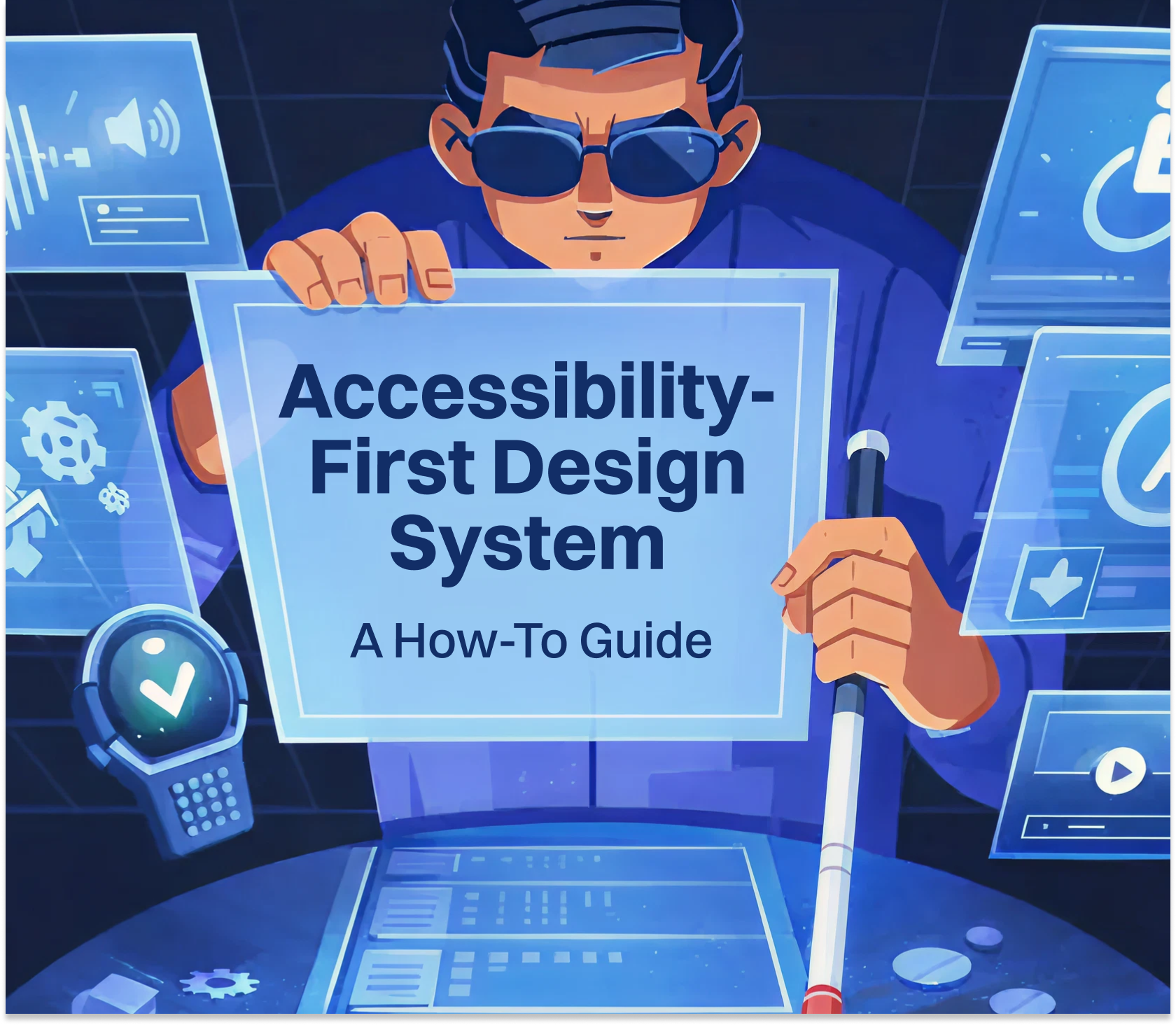
AI tools frequently prioritize visual output over semantic structure. That leads to problems such as:
In many markets this is not just a usability issue. It can prevent a product from launching due to legal accessibility requirements. Human quality gates are essential before development begins.
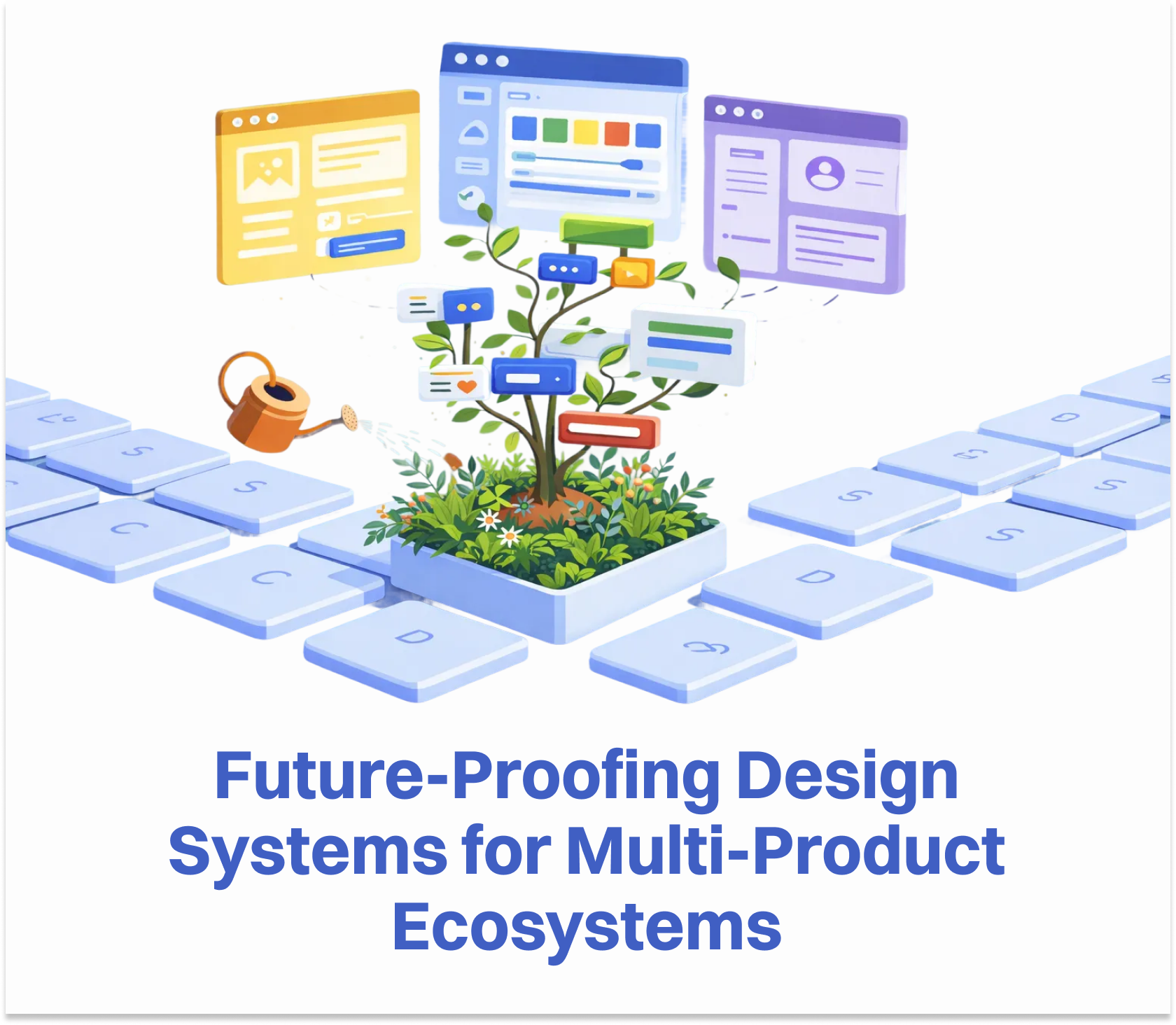
Design systems rely on standardized tokens for elements like color, spacing, and typography. AI tools often bypass these systems and generate hardcoded values. Instead of tokens such as:
primary-color
They generate values like:
#333333
This creates serious long term problems:
For engineering teams, fixing this later is expensive.
AI tools often treat screens as isolated artifacts. Real products are not isolated screens. They are systems of connected decisions and user journeys. Without human orchestration, teams end up with:
The result is a product that feels confusing despite having good looking screens.
Another risk is less technical but just as serious. AI generated design tends to converge toward a safe average. Most teams use the same tools and prompt libraries:
When companies generate brand assets the same way, products begin to look and sound similar.Research shows that audiences increasingly recognize AI heavy visuals. When work is identified as AI generated it is perceived as:
For startups this perception can damage trust. Customers may interpret an AI heavy brand as a signal that the company lacks stability or long term commitment.
The traditional belief has been simple. Human plus AI equals better results. Recent research suggests that assumption is not always true. A phenomenon called Negative Human Value is beginning to appear in multiple industries.As AI becomes more capable, average human professionals can actually reduce its performance.
The Trough of Mediocrity
In studies across fields such as medicine and forecasting:
One example from medical diagnosis showed:
The issue was not the AI. It was human overconfidence. People overrode correct AI outputs or misinterpreted the system. The lesson for product teams is important. Human value is shifting.
Judgment
Evaluating outputs and tweaking details.
Agency
Defining the purpose and direction of a system. AI is rapidly outperforming humans in many judgment based tasks. Human agency remains irreplaceable. Design leaders must shift from producing artifacts to defining the systems that generate them.
The next major transition in product design is structural. AI is no longer just a feature inside the interface. In many cases it becomes the interface itself. Traditional UX focused on screens and navigation. The emerging model focuses on intent. Instead of navigating menus, users increasingly express what they want directly.
Examples include:
This leads to a different design paradigm.
| Legacy Model | Emerging Model |
| Clicking through screens | Expressing intent to agents |
| Static interfaces | Generated interactions |
| Persistent apps | Disposable experiences |
Research around generative interfaces shows users prefer personalized interfaces generated for a specific task. In some studies these bespoke experiences were preferred 90 percent of the time over traditional websites. The implication for design teams is profound. Design is shifting from interface creation to intent specification.
Automation pressure is not evenly distributed across design roles. Roles focused primarily on production tasks are the most exposed.
AI is rapidly absorbing tasks such as:
Junior design roles built around production are shrinking as a result.
AI is also reshaping product team structures. Traditional coordination roles are shrinking because AI assistants can handle many operational tasks. For example:
Teams are becoming flatter and more autonomous. A single product leader can orchestrate work that previously required large cross functional teams.
The opposite is happening at the leadership level. Design managers are becoming strategic change leaders.Their responsibilities now include:
Technical capability alone is no longer enough. Emotional intelligence and leadership have become critical design skills.
The most effective agencies are not replacing designers with AI. They are restructuring their workflows around it. A common model emerging across agencies includes three phases.
AI helps analyze large data sets including:
But humans still define the problem.Design leaders act as translators between business stakeholders and technologists, ensuring the system solves a meaningful problem.This research driven foundation is essential when working on complex systems such as multi country financial platforms or enterprise tools.
Generative tools eliminate the blank canvas problem.
Design teams can explore multiple directions quickly through AI generated layouts and prototypes.
Human designers shift into creative director roles:
This is where brand differentiation still happens.
The final stage is where many AI generated products fail.Before development begins, teams must validate:
AI can assist in testing and asset generation, but humans remain responsible for technical accountability. Agencies like Redbaton structure these steps as quality gates inside the design workflow. The goal is not to slow teams down but to prevent costly mistakes that appear later in development.
When AI speed is combined with strong experience design leadership, the results are tangible. Several real world scenarios illustrate this balance.
Digital ordering platforms for wholesalers can remove reliance on manual sales visits. By simplifying ordering flows and inventory visibility, platforms can support millions of retailers with more reliable digital purchasing.
Financial tools such as transfer pricing systems must support collaboration across multiple countries. Designing these platforms requires:
AI handles data heavy modeling while human designers maintain clarity across the experience.
In emerging technology categories like micro mobility and smart home devices, usability determines adoption. Products must make complex technology feel invisible. When the experience works, users interact with the system without thinking about the interface at all.
When AI can generate assets instantly, the value of agencies shifts dramatically. The competitive advantage is no longer production. It is architecting trust. Agencies that remain relevant combine two capabilities.
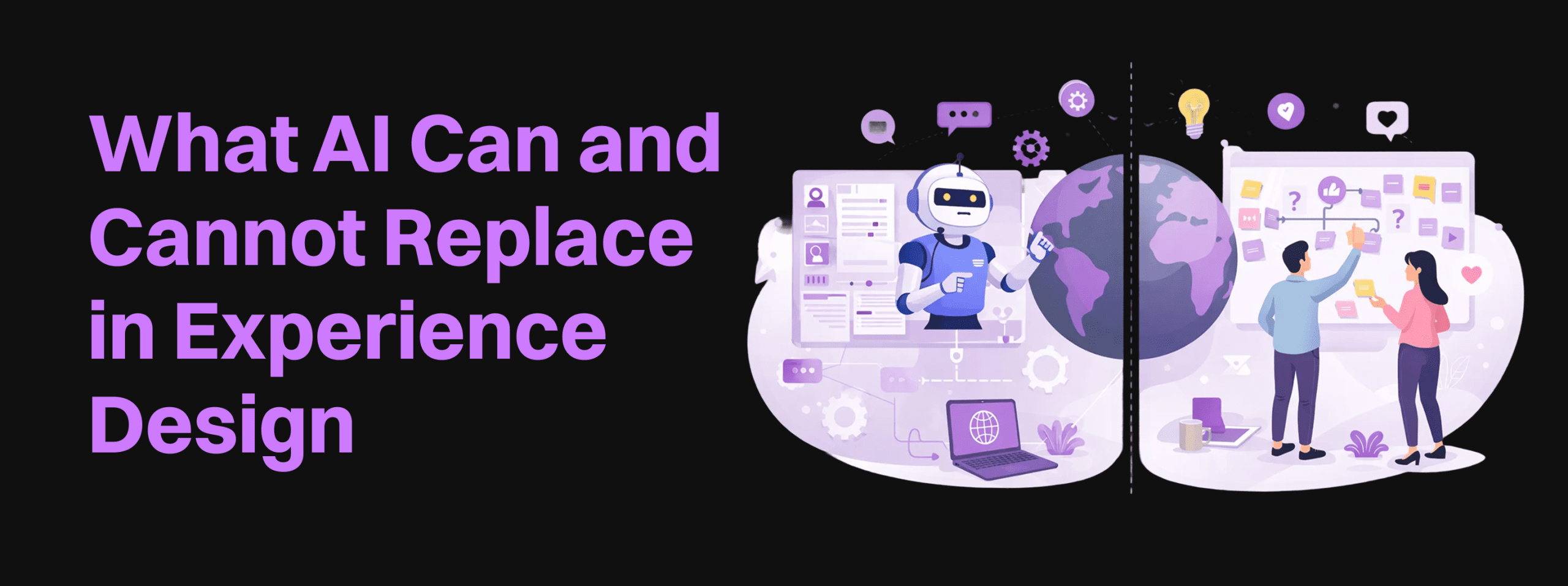
AI excels at:
Humans still dominate in areas such as:
The best design work emerges when these two strengths reinforce each other. This approach also shapes how Redbaton works with clients. The focus is less on producing design artifacts and more on building systems that align machine capability with human experience.
AI cannot experience empathy or build genuine trust. Human designers interpret emotional context and real user frustration. That insight ensures products solve meaningful problems instead of simply optimizing metrics.
Not reliably. AI often ignores semantic HTML structure, screen reader behavior, and keyboard navigation. Human accessibility audits are still required to ensure compliance with standards like WCAG 2.2.
Over reliance weakens independent thinking and spreads weak ideas. Teams may move faster initially but lose institutional knowledge and long term resilience.
Design leaders play a critical role. They translate technical capability into real user workflows and ensure AI features integrate into daily operations instead of existing as disconnected technology.
No. AI can summarize research data but cannot replace direct conversations with real users. Observing frustration, hesitation, and non verbal signals remains essential for discovering the real problem.
Most companies are still asking the wrong question.They ask whether AI will replace designers.The better question is this:
Who is orchestrating the system that AI is helping build?
If the answer is no one, speed will only create fragile products.If the answer is strong experience leadership, AI becomes one of the most powerful accelerators product teams have ever had.


