


AI in Graphic Design: Pros, Cons & What to Know
By Sharath Nair
Sep 23, 2026
Graphic design has never been good at staying still. First came the software that replaced the drawing table. Then the ability to collaborate across continents in real time. Now it's AI—and this one's different. It's not just another tool sitting in your toolbox. It's actively reshaping what the job itself means, what clients expect, and how creative teams need to think about their craft.
The question isn't whether AI in graphic design has arrived. It's been here for a while now. What's changed is the scale. Ninety-four percent of marketers have allocated AI budgets in 2024. The global market for AI in design is projected to grow from $20.1 billion in 2025 to $60.6 billion by 2030—a tripling in just five years. Search interest in "AI design tools" has spiked 800% over the past three years. What matters now is understanding what AI graphic design can genuinely deliver, where it hits a wall, and why your creative instinct still runs deeper than any algorithm ever will.
The Real Case for Using AI in Graphic Design
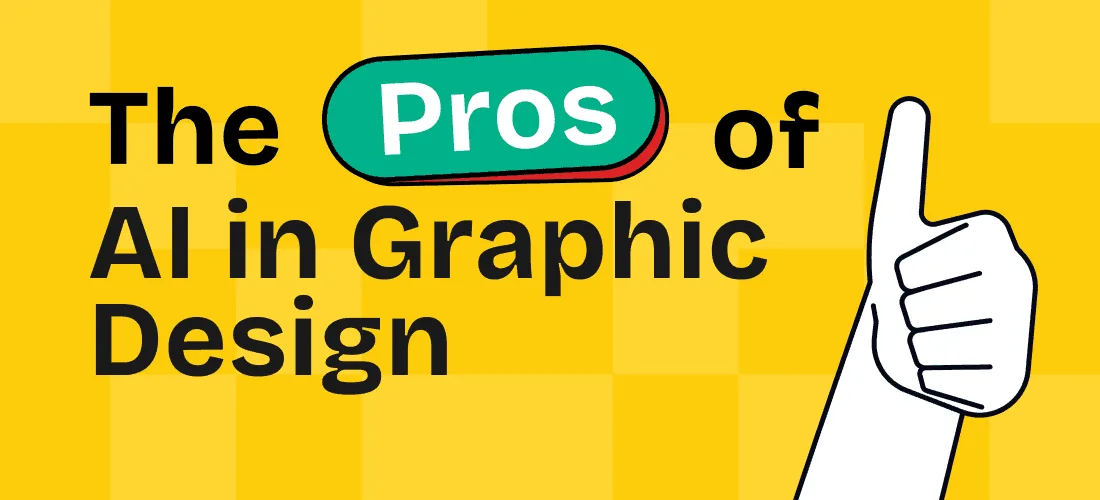
Let's start with what's genuinely working, without the hype. AI excels at specific, measurable things. Acknowledging that isn't selling out. It's being practical.
1. Speed Means Thinking Time
Repetitive tasks are where AI finds genuine footing. Image resizing for multiple formats, background removal, color palette generation, layout variations—these were always the parts of design that ate hours without requiring creative decisions. Now? A designer can generate 50 variations of a logo concept in minutes, each technically viable, each ready for human judgment.
Where AI Delivers Measurable Value:
| Task | Traditional Time | With AI | Efficiency Gain |
|---|---|---|---|
| Image resizing for multiple formats | 2-3 hours | 15 minutes | 90% faster |
| Color palette generation & exploration | 1-2 hours | 15 minutes | 95% faster |
| Layout mockups & initial drafts | 3-4 hours | 20 minutes | 92% faster |
| A/B design variations for testing | 4-6 hours | 30 minutes | 94% faster |
The compounding benefit: when designers aren't stuck in mechanical work, they can actually think. They can explore concepts more deeply, iterate based on strategy rather than time pressure, and spend mental energy on decisions that matter. This is where AI becomes genuinely useful—not as a replacement for thinking, but as a way to create space for it.
2. Making Design Accessible (But With Caveats)
Small brands and early-stage startups without design budgets can now put something in front of customers that doesn't look like it was made in 2007. AI tools with drag-and-drop interfaces and templated systems let non-designers create social posts, basic logos, and marketing materials without hiring a $5K/month agency. That's a real advantage for market testing.
The caveat is important: "professional-looking" and "distinctive" are not the same thing. AI-generated work will look polished and competent. It probably won't own a space or earn real market attention. For a brand trying to communicate something specific—trying to be the ed-tech platform that actually understands teachers, or the fintech that feels human—templated design won't get there.
3. Personalization at Scale
This one's underrated in industry conversations. AI can analyze user behavior, engagement patterns, and conversion data to suggest which color palettes, typography, or layouts might perform better with a specific audience. It's creating recommendations based on evidence, not guesswork.
Nutella used AI to generate 7 million unique package designs—a scale that becomes possible only when the repetitive generation work is automated. That's not about replacing designers. That's about enabling experiments that prove which design choices work for which segments.
Where AI Actually Breaks Down
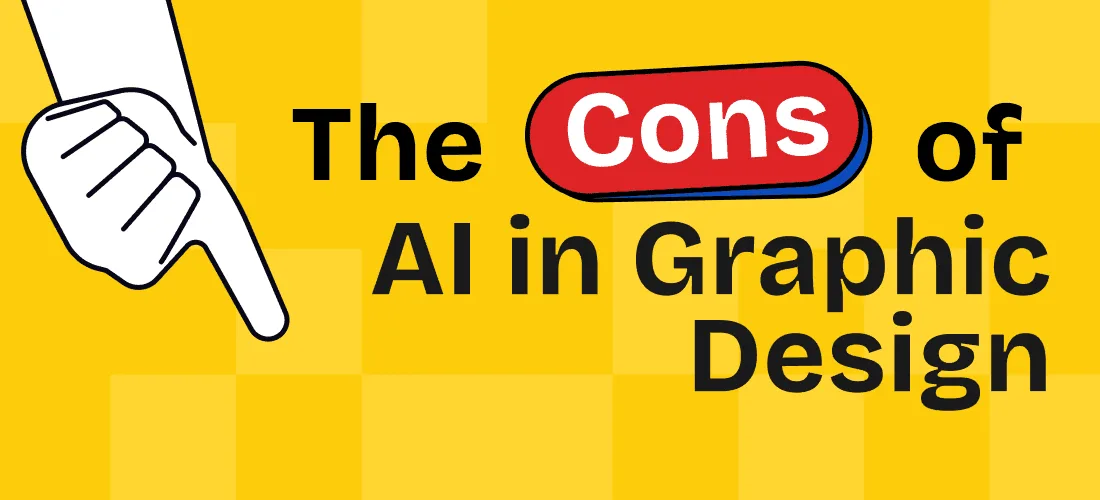
Now for the honest part. AI isn't a designer. It can perform design tasks, but it can't do the thinking that matters when stakes are real.
1. It Follows Patterns, Doesn't Break Them Intentionally
AI learns from existing design. It absorbs millions of good designs, finds statistical patterns, and repeats them. The problem is obvious: every designer using the same AI model, trained on the same data, starts to approach problems the same way. Bold sans-serif typography because it's statistically "friendly." Minimal layouts because they're safe. Soft color gradients because they're trending.
Real design happens when someone breaks a pattern because they understand why it works and why breaking it matters in this specific context. That requires thinking, strategy, and intention. That's not algorithmic. That's a human decision based on deep understanding of the business, the audience, and the competitive landscape.
2. Customization Hits Hard Limits
AI tools work best with standardized problems. Logo variations? Sure. A complete brand system spanning 50+ touchpoints with specific tone requirements, cultural nuance, and strategic positioning across industries like healthcare or fintech? You'll hit the boundaries of what templates can do very quickly.
When you're building a brand that needs to own space—when positioning matters and you need work that reflects something genuinely different about your company—the templated approach doesn't scale. You need someone understanding your business deeply, your customers' pain points, and what actually makes you different from everyone else doing similar work.
3. The Copyright & Ownership Gray Zone
Here's where the conversation gets uncomfortable. When AI generates a design, who actually owns it? If the AI was trained on existing work and produces something that resembles another designer's work, who bears the liability? These questions don't have clean legal answers yet. For risk-conscious brands—especially in regulated spaces like fintech or healthcare—using AI-generated work without human review and strategic intention creates exposure.
4. Automation Distances You From Your Audience
There's a reason imperfect typography, intentional composition choices, and human decisions feel different from AI-optimized work. It's not nostalgia. It's that human intention reads as authenticity. When every decision is the statistically safest one—when nothing breaks the pattern—the work stops feeling like it came from someone who actually cared about the problem.
How This Works in Reality
The future isn't "AI versus designers." It's designers who understand how to use AI effectively versus those pretending it doesn't exist.
Here's what actually works: AI handles the mechanical layer—generating variations, automating repetitive formatting, synthesizing feedback. Designers handle everything else: strategy, conceptualization, intentional iteration, refinement, and deciding which rules to break and why.
When you're working on branding and marketing projects that need to move the needle, the winning approach isn't handing everything to automation. It's using AI for exploration and rapid iteration, then bringing rigorous human judgment to decide which directions actually matter for your business.
The Honest Take
AI in graphic design is a productivity multiplier. A powerful one. It's not a replacement for strategic thinking, human intuition, or the kind of creative problem-solving that makes brands memorable and differentiable. Use AI to eliminate busywork. Don't use it to eliminate thinking.
The professionals surviving this shift aren't the ones resisting AI. They're the ones using it to create space for deeper work—strategy, positioning, and designs that actually communicate something true about the brands they're building.
Share blog on:


Chatter about
Design & random stuff