

Top 10 Design Agencies in San Francisco in 2026 (Branding, Product & Web)
By redbaton.digital
Oct 20, 2026
TL;DR
Searching for design agencies in San Francisco returns lists that blur brand studios, product design shops, and web builders together. Those are three different jobs, and hiring the wrong one wastes a quarter. This guide sorts the field by discipline first. Red Baton ranks 1st because it connects brand strategy, product UI/UX, and web engineering under one team, which suits AI and SaaS companies that need their positioning, product, and marketing site to tell the same story. The other nine picks each have a clear strength, from enterprise design systems to naming and verbal identity. Match the discipline to your most urgent problem, then use the stage guidance and buyer questions below to build your shortlist.
Table of Contents
- Introduction
- Why San Francisco Buys Design Differently
- Matching Discipline to Need
- Top 10 Design Agencies in San Francisco: Ranked List
- Agency Profiles
- Stage-by-Stage Guidance for San Francisco Founders
- Local Versus Remote Agencies in San Francisco
- Questions to Ask Before You Sign
- Concluding Thoughts
- Frequently Asked Questions
Introduction
San Francisco has a particular kind of design problem. A Series A AI startup in SoMa may ship a new model interface every two weeks, while its brand must read clearly to enterprise buyers and investors on Sand Hill Road. A developer-tools company in Mission Bay needs a docs site that converts engineers, not just a homepage that looks good. Each of these founders searches for design agencies in San Francisco and finds a flat list that treats them all the same.
The question that matters isn't whether an agency is talented. It's whether its strongest work matches the problem in front of you. Some firms create naming and brand systems that never touch a product screen. Others build polished interfaces with little input on positioning. Some excellent web studios can launch a site in weeks but aren't set up for complex product flows. This guide separates those strengths so you can compare like with like.
Why San Francisco Buys Design Differently

San Francisco's design market is shaped by its software economy. Many of the city's companies sell to other businesses, and their product interface is often their most important sales asset. Demo flows, onboarding screens, and admin dashboards carry as much weight as the pitch deck, which is why product design capability matters more here than in cities with a heavier consumer or service mix.
Speed also changes the calculation. Venture-backed teams in the city expect design partners to move at engineering pace, shipping components into a real codebase rather than delivering static files at the end of a quarter. Agencies that can work in that rhythm earn a place on the shortlist quickly.
AI Products Need Explanation as Much as Polish
Many San Francisco AI companies struggle less with visual quality than with explaining what their product does, how confident it is, and where human judgment still matters. Interface patterns for AI outputs, such as citations, confidence cues, and editable results, are design problems that need research. When you evaluate agencies, ask how they've handled that uncertainty in an interface, because it reveals whether they've worked on products that behave unpredictably.
Enterprise Buyers Judge a Product by Its Details
San Francisco startups often sell to enterprise procurement teams that compare vendors on security pages, documentation quality, and onboarding clarity. A design partner who understands how those touchpoints influence a buyer's decision can prevent a long sales cycle from stalling at the evaluation stage.
Matching Discipline to Need
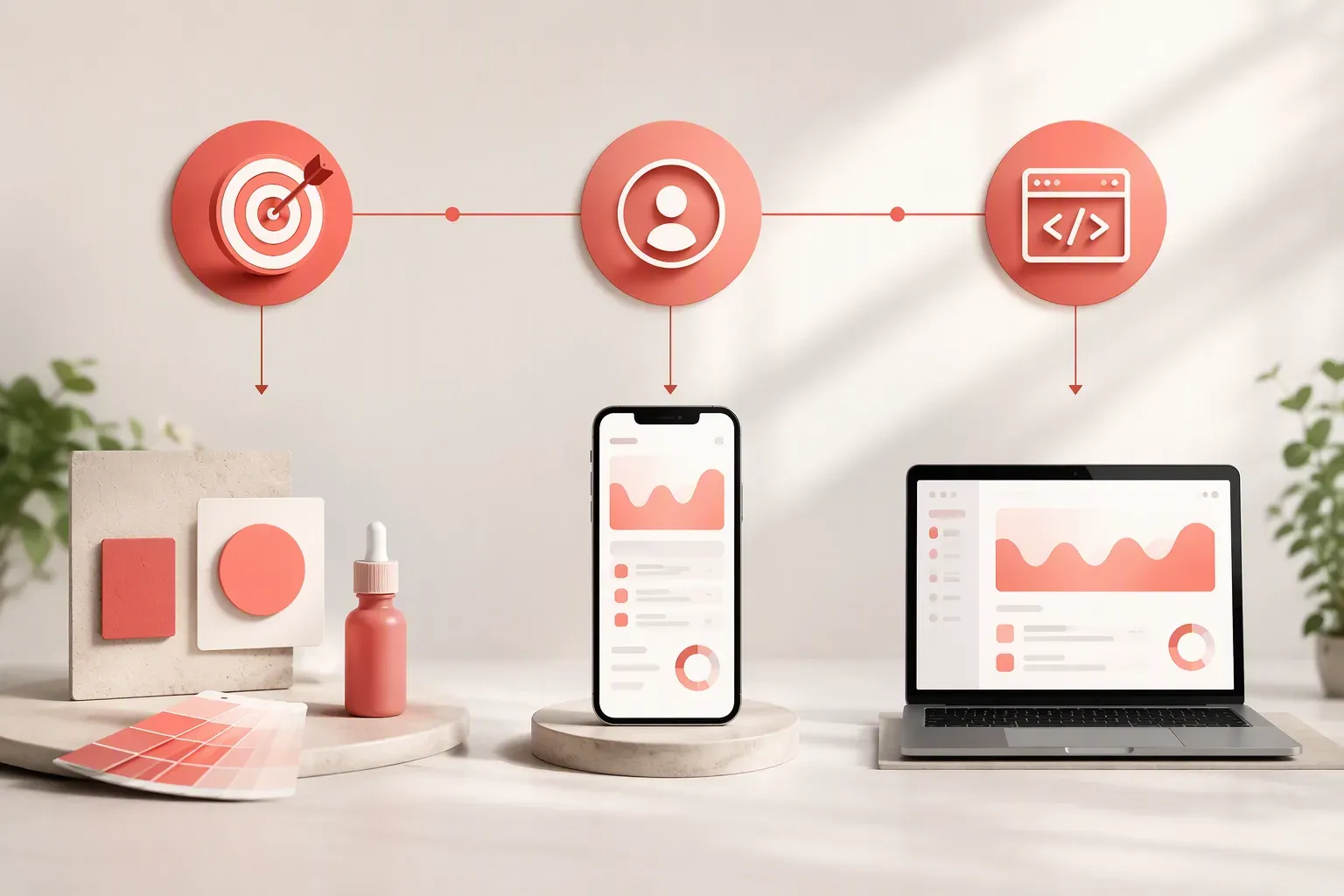
Before comparing names, decide which discipline you need first. The disciplines overlap, but each solves a different problem.
| Your Immediate Problem | Discipline to Look For | What Good Looks Like |
|---|---|---|
| Users stall during onboarding or in the product | Product UI/UX | Research-backed flows, usability testing, component systems |
| The company name or positioning isn't landing | Branding and naming | Positioning work, naming, verbal identity, messaging hierarchy |
| The marketing site doesn't convert or perform | Web design and engineering | Information architecture, CMS or Webflow builds, performance work |
| The product and brand feel like different companies | Integrated brand and product | One design language across website, app, and pitch materials |
| Enterprise software is too complex for buyers | Enterprise UX and design systems | Role-based interfaces, documented systems, scalable component libraries |
Most San Francisco companies arrive with one of these problems and leave needing two. Start with the one costing you pipeline or investor confidence right now.
Top 10 Design Agencies in San Francisco: Ranked List
| Rank | Agency | Strongest Discipline | Best Suited For |
|---|---|---|---|
| 1st | Red Baton | Brand, product, and web as one system | AI and SaaS scale-ups needing brand and product built together |
| 2nd | Catchword | Naming and verbal branding | Companies that need a name, positioning, and messaging architecture |
| 3rd | Ramotion | Branding and mobile/web product design | Venture-backed startups launching consumer or mobile products |
| 4th | Neuron | Enterprise UX and design systems | B2B SaaS teams simplifying complex dashboards and workflows |
| 5th | Theory SF | Brand identity and motion marketing | B2B tech companies needing campaign-ready identity |
| 6th | Baunfire | B2B web design and positioning | SaaS companies rebuilding a high-stakes marketing site |
| 7th | Upqode | Responsive web design and CMS builds | Growth-stage companies needing reliable business websites |
| 8th | RNO1 | Immersive web and motion-led brand experience | Brands whose website is the main product experience |
| 9th | Clear Digital | Enterprise web and rebranding | Established tech companies modernising legacy digital presence |
| 10th | Clay | Enterprise product design and design systems | Large product organisations needing scalable UI systems |
Agency Profiles
1st. Red Baton: Brand, Product, and Web as One System
Discipline Strength: Brand strategy, product UI/UX, and web engineering
Location: San Francisco hub, with distributed teams in Bengaluru and Atlanta
What They Do: Red Baton's branding services define how a company positions itself, its product design team carries those decisions into the app or dashboard, and its web work turns the same language into a marketing site that converts. For an AI or SaaS company, the pitch narrative, the product interface, and the homepage usually need to say the same thing. That's where an integrated team earns its place.
Local Work: Red Baton's San Francisco presence is an operating hub for US clients. The full portfolio, including its work for AI and fintech companies, is on the work page. Ask for references from SF-based clients in your sector when you speak with the team.
Best For: AI and SaaS scale-ups whose brand has to hold up inside the product as well as on the website.
Verify: Ask how positioning decisions are translated into interface patterns, and request a walkthrough of one project from brand to shipped screen.
2nd. Catchword: Naming and Verbal Identity
Discipline Strength: Naming, verbal branding, and brand architecture
Location: Bay Area (Oakland)
What They Do: Catchword develops brand names, messaging frameworks, and verbal identities for technology companies. Its work is built on naming and language rather than visual execution.
Best For: Companies that need a defensible name and a messaging system before any visual or product work begins.
Verify: Confirm whether they support trademark screening and how they hand off verbal guidelines to design teams.
3rd. Ramotion: Brand and Mobile Product Design
Discipline Strength: Brand identity and mobile/web product design
Location: San Francisco
What They Do: Ramotion bridges brand identity with iOS, Android, and web product design for technology startups and larger companies.
Best For: Venture-backed startups whose first product is mobile and whose brand must appear inside it from the start.
Verify: Ask how they scope brand work separately from product design when a project covers both.
4th. Neuron: Enterprise UX for Complex Software
Discipline Strength: Enterprise UX, SaaS product design, and design systems
Location: San Francisco
What They Do: Neuron focuses on simplifying complex enterprise workflows, data-heavy dashboards, and B2B SaaS applications, with research and usability testing built into the process.
Best For: B2B SaaS teams whose buyers struggle with the product's complexity.
Verify: Ask whether their design systems are documented well enough for your engineers to maintain without them.
5th. Theory SF: Identity With Motion Marketing
Discipline Strength: Brand identity, anthem video, and paid social creative
Location: San Francisco
What They Do: Theory SF works with B2B technology companies on brand identity, corporate identity systems, and motion-led marketing assets.
Best For: B2B tech companies that need campaign-ready brand material for launches and fundraising announcements.
Verify: Confirm how identity extends into the product itself, since their strength sits mainly in marketing creative.
6th. Baunfire: B2B Web and Positioning
Discipline Strength: B2B web design and brand positioning
Location: Bay Area
What They Do: Baunfire designs websites and digital brand expressions for B2B, SaaS, and enterprise technology companies.
Best For: SaaS companies rebuilding a marketing site that has to support a complex sales process.
Verify: Ask how far their work extends into in-product UX, which is generally a separate scope.
7th. Upqode: Conversion-Ready Business Websites
Discipline Strength: Responsive web design and CMS builds
Location: San Francisco
What They Do: Upqode builds responsive business websites and maintains CMS deployments, with on-page SEO and UI support.
Best For: Growth-stage companies that need a reliable, well-built marketing site on a practical budget.
Verify: Ask how they approach custom product flows, since their strength is in standard web builds.
8th. RNO1: Immersive Web Experiences
Discipline Strength: Immersive, motion-led web design
Location: San Francisco
What They Do: RNO1 builds motion-driven and WebGL-powered web experiences for brands where the website is part of the product story.
Best For: Brands whose website is itself the experience, such as design-forward consumer or creative platforms.
Verify: Check how the experiences perform on mobile and with the accessibility requirements your buyers expect.
9th. Clear Digital: Enterprise Web and Rebranding
Discipline Strength: Enterprise web development and rebranding
Location: San Francisco
What They Do: Clear Digital works on web transformation, rebranding, and digital strategy for established technology and cloud companies.
Best For: Established tech companies modernising their digital presence across a large site estate.
Verify: Confirm the team size and timeline they'd propose, since engagements at this scale tend to run longer.
10th. Clay: Enterprise Product Design Systems
Discipline Strength: Enterprise product design and design systems
Location: San Francisco
What They Do: Clay builds product design, design systems, and UI for large software organizations, with brand and web work alongside.
Best For: Product organizations that need scalable interface systems shared across several teams.
Verify: Ask how they structure engagements for teams under Series B, since their typical scope is larger than early-stage budgets allow.
Stage-by-Stage Guidance for San Francisco Founders

Funding stage determines which discipline should come first and how much an engagement should cost.
Seed and Pre-Seed: Name, Identity, and a First Product
Early teams in San Francisco often need a defensible name, a clear story, and a first product version that investors can click through. Look for naming specialists such as Catchword for language, or mobile-focused studios such as Ramotion when the first product is an app. Red Baton fits when the brand and first product need to be designed together. For a wider comparison of brand partners, see this list of branding agencies in San Francisco. Budgets commonly run from $15,000 to $50,000, depending on whether naming and product design are both included.
Series A and Growth: Product and Brand Must Agree
After a Series A, the product reaches customers and the brand appears in sales decks, job postings, and investor updates. Inconsistency becomes costly. Look for integrated teams that can connect positioning to interface decisions. Expect budgets of $75,000 to $150,000 for a combined brand, product, and web engagement.
Enterprise and Scaled B2B: Systems Over Visuals
Larger companies need design systems that several product teams can maintain, along with web estates that stay consistent across regions. Neuron and Clay suit complex enterprise products, while Clear Digital fits established companies modernising their web presence. Ask how documentation and governance will work once the agency has left.
Local Versus Remote Agencies in San Francisco
San Francisco offers direct access to founders, investors, and enterprise buyers, which makes local studios valuable during positioning and fundraising. In-person workshops with leadership teams, quick sessions with customers, and attendance at demo days all benefit from a studio that can meet you in the city.
Remote studios can offer lower overhead and broader talent pools. Bengaluru is 12 and a half hours ahead of San Francisco during most of the year, so live collaboration is limited to a narrow window. That gap works best with a structured async process: written briefs, Loom walkthroughs, and a single weekly review call. Many San Francisco teams split the work, using a local partner for positioning and stakeholder alignment, and a remote partner for systems and production.
Questions to Ask Before You Sign
How Do You Hand Off Design to Engineering?
Ask whether you'll receive Figma components, design tokens, or annotated specifications, and how the team reviews implementation with engineers. Weak answers end with "we send the files."
Which Discipline Leads Our Project?
Ask for the names and seniority of the people who will lead the work. A team strong in brand but thin in product design may hand the interface to someone you haven't met.
How Do You Design for AI Uncertainty?
For AI products, ask how they design citations, confidence signals, and editable outputs. The answer shows whether they've worked on products where the interface has to explain machine behavior.
What Can Our Team Maintain Without You?
Ask for a component library, brand guidelines, and a training session. Systems your team can use directly keep the work consistent as you hire.
Concluding Thoughts
The best design agencies in San Francisco aren't interchangeable, and choosing the wrong discipline is expensive. A naming studio can give you a strong name, but your product still needs screens that convert. A product design team can fix onboarding, but it may not sharpen the positioning your investors read first. Decide which problem is most urgent, then choose the agency whose strongest work matches it. If you need brand, product, and web to work as one system, start with a conversation with the Red Baton team.
Frequently Asked Questions
1. How much do design agencies in San Francisco charge for a startup project?
Seed-stage naming and identity work often starts around $10,000 to $40,000. Product UI/UX engagements for B2B platforms typically run $25,000 to $100,000 or more. Ask each agency for a fixed-scope proposal with milestones so you compare deliverables, not just day rates.
2. What is the difference between a product design agency and a branding agency?
A product design agency designs the interfaces people use, from onboarding to dashboards. A branding agency defines positioning, naming, and visual identity. Many San Francisco companies need both, so look for teams that can sequence the work or handle both under one roof.
3. Should I hire a local San Francisco agency or a remote digital partner?
Local studios offer in-person workshops, investor-facing credibility, and easy access to your customers. Remote partners often bring lower overhead and broader talent pools. Many companies combine both, keeping positioning local and handing systems and production to a remote team.
4. How long does a product or web redesign take in San Francisco?
A focused marketing site rebuild usually takes 6 to 10 weeks. A product redesign for a complex SaaS platform often runs 3 to 6 months, depending on research depth, the number of user roles, and how quickly internal decisions are made.
5. Why do so many AI companies in San Francisco need specialized design work?
AI products have to explain uncertainty, show how outputs were generated, and let users correct them. Those patterns are not standard in most interface libraries, so teams often need design partners who have researched and tested them.
6. What should a design agency deliver at the end of an engagement?
Expect source files, a documented design system or brand guideline, reusable components, and a handover session with engineers and marketers. Ask for research artifacts too, since they explain why design decisions were made and help your team build on the work later.
Share blog on:


Chatter about
Design & random stuff